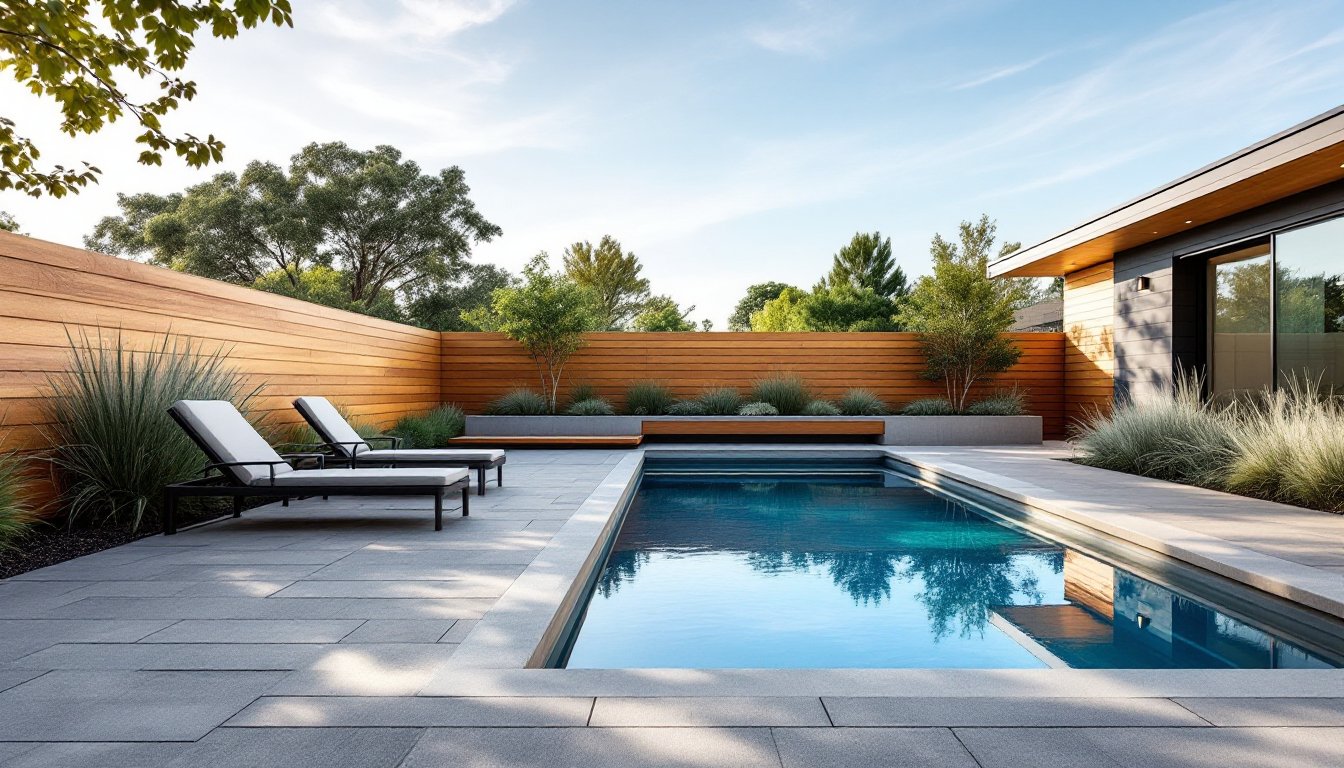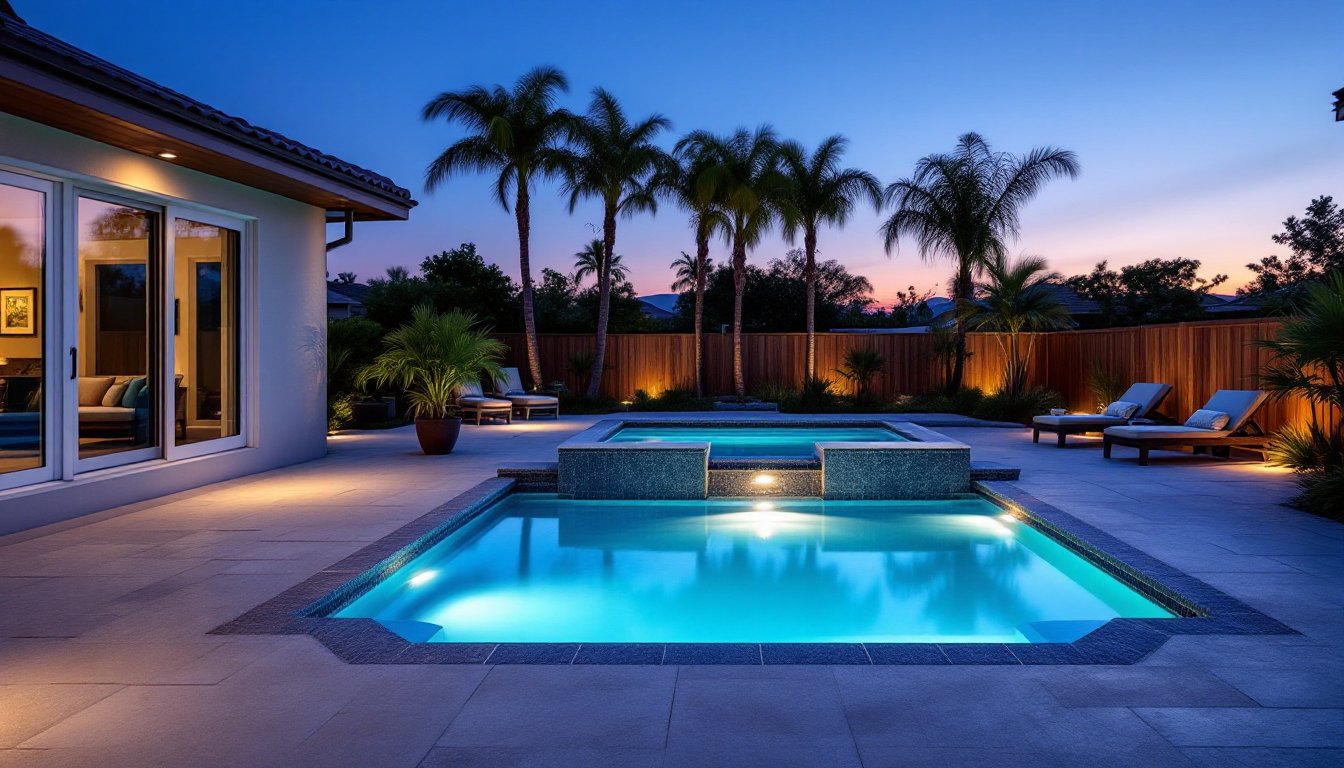
A well-lit pool area extends swim season into the evening hours and turns a simple backyard into an entertainment destination. But lighting around water isn’t just about looks, it’s about safety, code compliance, and durability in harsh conditions. Poor placement creates dark spots where kids can trip. The wrong fixtures corrode in months from pool chemicals. And inadequate wiring can trip breakers or worse. This guide covers the lighting types, layout strategies, and installation requirements to get your pool area lit properly the first time.
Table of Contents
ToggleKey Takeaways
- Outdoor lighting for pool areas prevents slip-and-fall accidents by clearly illuminating steps, ladders, deck edges, and pathways, with safety being a non-negotiable priority alongside ambiance.
- Underwater LED fixtures dramatically reduce energy costs by 80% compared to incandescent models while offering color-changing options and 50,000-hour lifespans for efficient pool lighting solutions.
- Proper deck and pathway lighting requires GFCI protection within 20 feet of the pool per National Electrical Code Article 680, with recessed lights spaced 6–8 feet apart and post cap lights rated for wet locations.
- Low-voltage lighting systems ($100–$600 for transformers) offer DIY-friendly installation when using buried direct-burial cable at 6–12 inches deep, with voltage testing and waterproof connections essential for reliability.
- Smart outdoor lighting for pools integrates with Wi-Fi or Bluetooth controllers to enable scheduling, dimming, and voice control, with IP65+ ratings ensuring durability in harsh chemical and moisture-heavy environments.
- Plan your pool area lighting layout using a scaled diagram that prioritizes task lighting at steps and diving areas (10–20 lumens per square foot), then layers ambient and accent lighting while avoiding direct glare on windows.
Why Pool Area Lighting Matters for Safety and Ambiance
Proper pool lighting serves two non-negotiable purposes: preventing accidents and creating usable nighttime space. According to the U.S. Consumer Product Safety Commission, most pool-related injuries occur during evening hours when visibility drops. Adequate lighting around steps, ladders, diving boards, and deck edges reduces slip-and-fall incidents significantly.
From a functional standpoint, lighting defines boundaries. Guests need to see where the deck ends and the water begins. They need clear pathways to avoid furniture, planters, or changes in elevation. Without sufficient lumens at ground level, even familiar spaces become hazard zones after sunset.
Ambiance comes second but shouldn’t be ignored. Well-designed lighting highlights landscaping, architectural features, and water movement. It sets the mood for evening gatherings without requiring floodlight intensity. The key is layering multiple light sources at varying heights and intensities to avoid harsh shadows or glare.
Building codes also factor in. The National Electrical Code (NEC) Article 680 governs pool wiring and requires GFCI protection for all lighting within 20 feet of the pool’s inside wall. Local jurisdictions may add stricter requirements, and permit inspections often focus heavily on wet-location electrical work. Skipping permits for low-voltage systems might seem tempting, but inspectors can still flag non-compliant installations during property sales or insurance claims.
Types of Outdoor Lighting Perfect for Pool Areas
Underwater LED Lights
Underwater fixtures transform the pool itself into a glowing feature. Modern LED pool lights pull 30–50 watts compared to 300–500 watts for older incandescent models, cutting energy costs by 80% or more. They mount flush into the pool wall, typically 18 inches below the waterline, and require a dedicated junction box at least 4 feet from the pool edge (per NEC 680.23).
Color-changing LEDs offer 7–16 hues controlled via remote or smartphone app. White LEDs range from warm (2700K) to cool (5000K): warmer tones feel more inviting for residential settings, while cooler temps increase visibility for lap swimming. Expect to pay $200–$600 per fixture, plus $300–$800 in electrician fees if retrofitting an existing pool.
Installation requires draining the pool to access the niche, a job best left to professionals unless you’re comfortable with underwater epoxy and waterproof conduit work. Niches are standardized (Pentair, Hayward, Jandy), but double-check compatibility before ordering replacement lights.
Deck and Pathway Lighting
Surface lighting guides traffic and prevents trips. Options include:
- Recessed deck lights: Flush-mounted into composite or wood decking. Use wet-rated canisters with tempered glass lenses. Space them 6–8 feet apart along walkways and 3–4 feet apart near steps. Most run on 12V or 24V low-voltage systems, which require a transformer but eliminate shock risk near water.
- Post cap lights: Sit atop deck railings or fence posts. They cast downward pools of light without glare. Look for marine-grade finishes (powder-coated aluminum or stainless steel) to resist pool chemicals and humidity.
- Path lights: Stake-mounted fixtures that line garden beds or stone pathways. Keep them 12–18 inches tall to avoid creating light pollution. Shielded designs direct light downward rather than into swimmers’ eyes.
- Strip lighting: Flexible LED tape installs under coping, bench seating, or stair nosings. It provides continuous glow without hotspots. Use IP67-rated or higher for wet locations: IP65 isn’t waterproof enough for direct spray.
For weekly pool service routines, ensure fixtures don’t obstruct skimmer access or cleaning equipment paths.
Planning Your Pool Lighting Layout for Maximum Impact
Start with a scaled diagram of your pool area, graph paper works, or use a free design app like SketchUp. Mark existing electrical access points, GFCI outlets, and the main service panel location. Measure distances from the panel to each proposed light location: voltage drop becomes an issue on low-voltage runs exceeding 100 feet (requiring thicker wire or multiple transformers).
Prioritize task lighting first: steps, ladders, shallow-end benches, and the diving area. These need consistent, shadow-free illumination, aim for 10–20 lumens per square foot. Next, add ambient lighting around seating areas and landscaping. Finally, layer in accent lights to highlight water features, stonework, or plantings.
Avoid placing lights where they’ll shine directly into the house or neighbors’ windows. Use shielded fixtures, directional spots, or lower-wattage bulbs in those zones. Test beam angles before permanent installation, most landscape spotlights offer 15°, 30°, or 60° spreads. Narrow beams work for uplighting trees: wide floods cover larger deck sections.
Consider sight lines from inside the home. Lighting should enhance the view through patio doors, not create glare on the glass. And remember that water reflects light, fixtures aimed at the pool surface will bounce illumination upward, so you’ll need fewer lumens than for a dry landscape.
For anyone new to pool maintenance basics, lighting placement should also account for equipment access and cleaning routines.
Installation Tips and Safety Considerations
Permit and code compliance come first. Most municipalities require electrical permits for any pool lighting work involving line-voltage (120V) circuits. Low-voltage systems sometimes get a pass, but check with your local building department. Inspections verify GFCI protection, proper bonding of metallic components, and wet-location fixture ratings.
Bonding is non-negotiable. NEC 680.26 mandates that all metal within 5 feet of the pool, railings, light fixtures, ladders, even rebar in the deck, be connected to a common bonding grid using #8 AWG solid copper wire. This equalizes voltage potential and prevents shock hazards. A licensed electrician should verify bonding during installation.
For DIY-friendly low-voltage systems, follow these steps:
- Choose a transformer location: Mount it at least 10 feet from the pool’s inside wall, in a weatherproof enclosure on a GFCI-protected circuit. Transformers range from 100W (enough for 8–10 deck lights) to 600W (for larger systems).
- Run buried cable: Use direct-burial-rated 12/2 or 14/2 low-voltage wire. Bury it 6 inches deep in conduit, or 12 inches if running under turf. Mark the route on your site diagram for future reference.
- Test voltage at each fixture: Use a multimeter to confirm 11–13V at the farthest light. If voltage drops below 10.5V, upsize the wire or add a second transformer.
- Seal all connections: Use waterproof wire nuts and heat-shrink tubing, or grease-filled DB-Y connectors. Moisture intrusion is the #1 cause of low-voltage system failure.
Safety gear: Wear rubber-soled boots and work gloves when handling wire. Use a GFCI-protected extension cord for power tools near the pool. Never work on line-voltage circuits with wet hands or standing on damp ground.
For underwater light retrofits or line-voltage work, hire a licensed electrician. Pool electrocution incidents are rare but catastrophic, code compliance isn’t optional.
Energy-Efficient and Smart Lighting Options
LED technology dominates modern pool lighting for good reason: 50,000-hour lifespans, 80% energy savings, and instant-on performance in all weather. Compare that to halogen bulbs (2,000-hour life, high heat output) or compact fluorescents (poor in cold temps, contain mercury). Upfront LED costs are higher, $15–$40 per bulb versus $5–$10 for halogen, but payback comes within 18 months in most climates.
Solar-powered path lights work for perimeter lighting but can’t match the output or reliability of wired systems. They need 6+ hours of direct sun daily, and battery capacity degrades after 2–3 years. Use them as supplemental accent lights, not primary safety lighting.
Smart lighting systems integrate with Wi-Fi or Bluetooth controllers, allowing scheduling, dimming, and color changes via smartphone. Popular platforms include Philips Hue (requires a hub), STKR TRiLIGHT (motion-activated), and Govee (budget-friendly color options). For the best smart outdoor lights suited to pool environments, look for IP65 or higher ratings.
Many outdoor smart lighting systems now offer voice control through Alexa or Google Assistant, plus automation routines, lights can turn on at sunset, dim at 10 PM, and shut off at midnight without manual input. Some integrate with pool automation systems (Pentair IntelliCenter, Hayward OmniLogic) for unified control of pumps, heaters, and lights.
Timers and photocells offer simpler automation. A 120V mechanical timer ($15–$30) or an astronomical timer ($40–$80) that adjusts for seasonal daylight changes can manage your entire system. Photocells turn lights on at dusk automatically but don’t offer off-time control.
For those who maintain regular pool cleaning schedules, smart controls make it easy to turn on lights remotely before arriving home for an evening swim.