If mobility is declining or you’re just tired of climbing over a tub wall every morning, a tub-to-shower conversion makes sense, and Bath Fitter has built a reputation for quick turnarounds using acrylic overlay systems. But what does it actually cost? Expect to pay anywhere from $3,500 to $10,000+ depending on shower size, wall configuration, and accessories. That’s a wide range, and understanding what drives the price, and whether Bath Fitter’s approach fits your situation, is critical before you sign a contract or commit to financing.
Table of Contents
ToggleKey Takeaways
- Bath Fitter tub to shower conversion cost ranges from $3,500 to $10,000+, with most standard conversions falling between $4,000 and $8,000 depending on size, features, and regional labor costs.
- The acrylic overlay system installs quickly in 1–2 days without demolition or backer board replacement, making it ideal if you need fast results and your existing structure is sound.
- Basic packages start around $3,500 for a 36″ x 60″ base with standard fixtures, while premium setups with barrier-free bases, glass doors, and body jets can exceed $10,500.
- Bath Fitter’s lifetime warranty on materials and installation transfers in most markets, offering long-term peace of mind, though the system won’t address hidden rot, mold, or plumbing issues.
- Traditional tile contractors cost 15–30% more but offer greater customization and design freedom, while DIY conversions can save money but require intermediate-to-advanced waterproofing skills.
- Financing through Bath Fitter or third-party lenders often features deferred interest—read the fine print to avoid retroactive interest charges if you don’t pay off within the promotional period.
Understanding Bath Fitter Tub to Shower Conversions
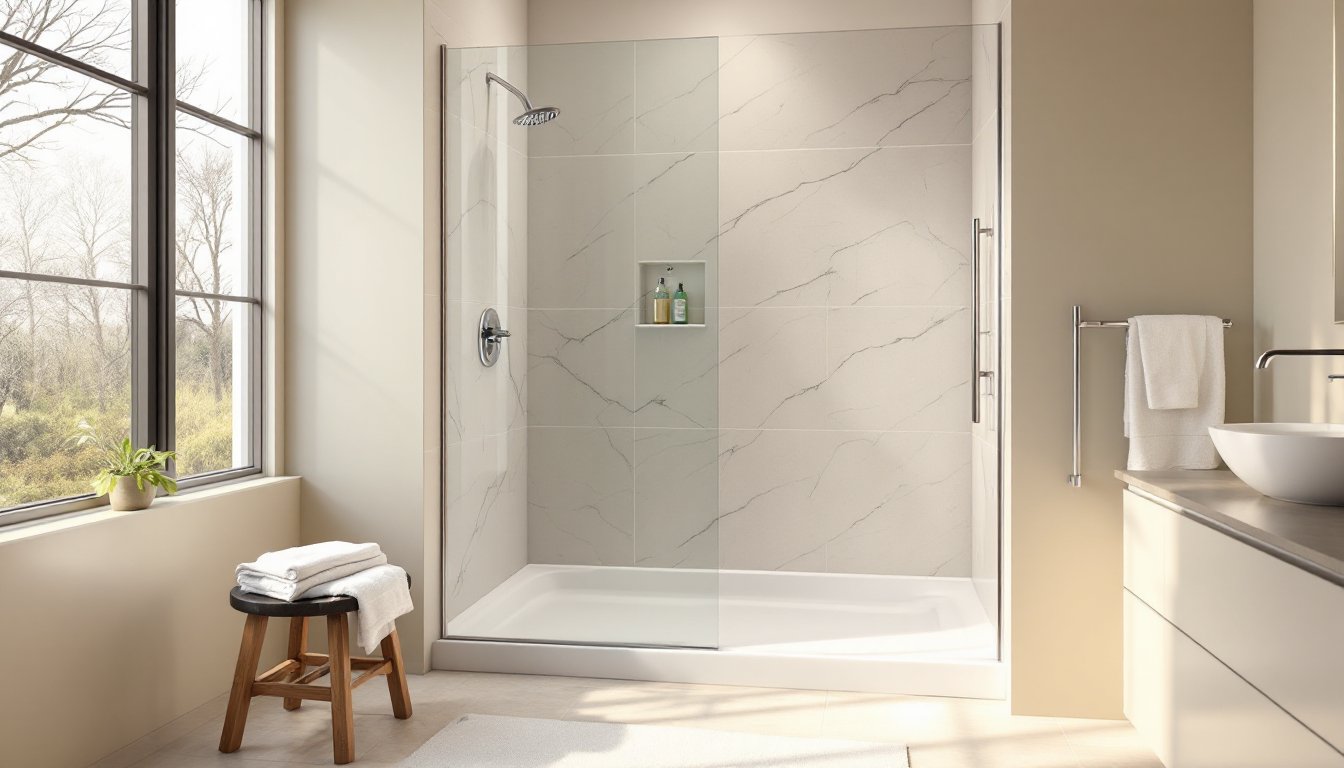
Bath Fitter specializes in custom-molded acrylic overlays that install directly over existing tubs or, in this case, remove the tub and install a low-profile or zero-threshold acrylic shower base and walls. It’s not a traditional rip-out remodel. They measure your space, fabricate custom panels at their facility, then return for a one- or two-day installation.
The system skips demolition and backer board replacement. Instead, installers pull the tub, prep the subfloor (leveling if needed), set a new acrylic base, then secure interlocking wall panels using proprietary adhesive and aluminum extrusions. Seams are caulked, fixtures installed, and the job’s done.
Key features:
- Low-threshold or barrier-free bases for accessibility
- Built-in shelving and benches (mold-resistant and integrated into the wall panels)
- Grab bar reinforcement can be added during install
- Lifetime warranty against peeling, cracking, and discoloration (transferable in most markets)
This approach works well if your walls, studs, and subfloor are in good condition. If there’s rot, mold behind the walls, or plumbing that needs rerouting, Bath Fitter typically won’t address it, you’ll need a licensed contractor first.
Average Cost of Bath Fitter Tub to Shower Conversion
National averages for Bath Fitter tub-to-shower conversions in 2026 run between $4,000 and $8,000 for most standard bathrooms. Here’s the typical breakdown:
- Basic conversion (36″ x 60″ base, three-wall surround, standard fixtures): $3,500–$5,000
- Mid-range setup (corner neo-angle base, built-in bench, upgraded valve trim): $5,500–$7,500
- Premium package (barrier-free base, custom glass door, grab bars, body jets): $8,000–$10,500+
Pricing is regional. Urban markets with higher labor costs (New York, San Francisco, Seattle) skew toward the upper end. Rural or suburban Midwest installations often land closer to the base figure.
For context, a tub-to-shower conversion using a traditional contractor can range from $3,000 to over $12,000 depending on tile, fixtures, and whether you’re relocating the drain.
What’s included in the base price:
- Tub removal and disposal
- Custom-molded acrylic base and wall panels
- Standard single-function showerhead and trim
- Installation labor (usually one day)
- Basic warranty registration
Not included:
- Plumbing relocation or fixture upgrades beyond standard valve trim
- Structural repairs (joists, studs, subfloor rot)
- Glass doors (some packages include a curtain rod: glass is an add-on)
- Electrical work for exhaust fan upgrades or lighting
What Affects Your Total Conversion Price?
Bath Fitter’s pricing model isn’t published online, you get a quote after an in-home consultation. Several factors move the needle:
Base size and shape: Standard 60″ x 32″ bases cost less than corner neo-angles or custom barrier-free pans. Larger footprints require more material and labor.
Wall configuration: Three-wall alcoves are straightforward. If you have a window, partial wall, or need a fourth panel for an exposed side, expect upcharges of $500–$1,200.
Built-in features: Integral benches, corner caddies, and grab bar blocking add $200–$800 depending on size and reinforcement requirements.
Fixtures and trim: Upgrading from a basic chrome valve and showerhead to a brushed nickel thermostatic valve with a rain head and hand shower runs $400–$1,000 more.
Glass enclosures: Semi-frameless or frameless glass doors add $800–$2,500. Bath Fitter partners with glass suppliers but doesn’t manufacture doors in-house, so this is often quoted separately.
Accessibility modifications: Zero-threshold pans for wheelchair access or ADA-compliant grab bars may increase material costs by $300–$700, though some jurisdictions offer rebates for aging-in-place retrofits.
Prep work: If your subfloor needs reinforcement or leveling, that’s additional. Bath Fitter subcontracts structural work, and you’ll pay going rates for your area ($200–$600 for minor leveling).
Homeowners using cost estimators often find Bath Fitter quotes land 10–20% higher than DIY material costs but 15–30% lower than full custom tile jobs with union labor.
Bath Fitter vs. Traditional Contractors: Cost Comparison
How does Bath Fitter stack up against a general contractor doing a traditional shower build?
Bath Fitter:
- Timeline: 1–2 days after measurement (2–3 weeks lead time for fabrication)
- Average cost: $4,000–$8,000
- Materials: Acrylic (non-porous, low maintenance)
- Customization: Moderate (color, texture, built-ins, but no tile or unique layouts)
- Warranty: Lifetime on materials and installation
Traditional tile contractor:
- Timeline: 5–10 days (demo, backer, waterproofing, tile, grout, cure time)
- Average cost: $5,000–$12,000+
- Materials: Cement backer, waterproof membrane, ceramic or porcelain tile, grout
- Customization: High (any tile, layout, niche, bench design)
- Warranty: Typically 1–2 years on labor: tile itself has no warranty
DIY route:
- Timeline: 2–4 weekends (depends on your skill and schedule)
- Material cost: $1,200–$3,500 (pan, backer, membrane, tile, fixtures)
- Tools needed: Tile saw, trowel, grout float, level, drill, possibly a mixing paddle for mortar
- Skillset: Intermediate to advanced. Waterproofing a shower is not beginner-friendly, mistakes lead to rot and mold behind walls.
Bath Fitter makes sense if you want speed and simplicity without managing subcontractors. A traditional contractor gives you design freedom and long-term resale appeal if tile is expected in your market. DIY saves money but demands time, tools, and confidence in waterproofing details.
Many renovation platforms suggest getting three quotes: one from Bath Fitter, one from a tile contractor, and one material estimate if you’re considering DIY.
Financing and Payment Options for Your Conversion
Bath Fitter partners with third-party lenders to offer financing, often promoted as zero-interest for 12–24 months (subject to credit approval). Here’s what to know:
Deferred interest vs. 0% APR: Many promotions are deferred interest. If you don’t pay off the balance before the promo period ends, you owe interest retroactively from day one at rates of 18–26.99% APR. Read the fine print.
Typical terms:
- 12 months same-as-cash (minimum monthly payment required)
- 24–60 month installment loans at 5.99–12.99% APR depending on credit score
- Minimum financing amounts (often $1,500–$2,000)
Alternatives to in-house financing:
- Home equity line of credit (HELOC): Rates in 2026 average 7–9%, often tax-deductible if used for home improvement
- Personal loans: Fixed rates from 6–15% depending on credit: no collateral required
- Credit cards with intro 0% APR: Some cards offer 15–18 months interest-free on purchases: useful if you can pay off within the window
- Energy-efficiency or accessibility grants: Some states and municipalities offer rebates for barrier-free showers or water-saving fixtures. Check local programs before financing.
Payment schedule: Bath Fitter typically requires a deposit at contract signing (often 30–50% of the total), with the balance due upon completion. If financing, the lender pays Bath Fitter directly, and you repay the lender.
Is a Bath Fitter Tub to Shower Conversion Worth the Investment?
It depends on your priorities and your home’s condition.
When Bath Fitter makes sense:
- Speed matters: You need the bathroom functional in days, not weeks.
- Existing structure is sound: No rot, mold, or plumbing issues hiding behind walls.
- Low maintenance appeal: Acrylic is easier to clean than tile and grout.
- Aging in place: You want a low-threshold or barrier-free shower for mobility without a lengthy remodel.
- Warranty reassurance: Lifetime coverage offers peace of mind if you plan to stay in the home.
When to consider alternatives:
- You’re selling soon: Tile showers often have broader buyer appeal and perceived quality, especially in higher-end markets.
- Customization is key: You want unique tile patterns, niches, or non-standard dimensions.
- Hidden issues likely: Older homes with suspect plumbing or water damage need a full inspection and repair, which Bath Fitter won’t handle.
- Budget is tight: DIY or a basic tile job with a handyman may cost less if you’re comfortable managing the project.
Resale impact: Bath Fitter installations typically recoup 60–75% of cost at resale, similar to mid-grade bathroom remodels. High-end tile jobs can return 70–85%, but only if executed well.
Durability: Acrylic is impact-resistant and won’t crack like ceramic, but it can scratch. Deep scratches require professional buffing. Tile, if installed correctly with proper waterproofing, lasts 20+ years but demands grout maintenance.
Conclusion
A Bath Fitter tub-to-shower conversion costs $4,000–$8,000 on average, offering speed and simplicity with a lifetime warranty. It’s a solid choice for homeowners who need quick turnaround, have structurally sound bathrooms, and value low-maintenance acrylic over tile. Get multiple quotes, clarify what’s included, and inspect your framing and subfloor before committing, no overlay system can fix hidden rot or outdated plumbing.