If your outdated bathtub has become a daily obstacle course, a walk-in shower conversion might be on your radar. Bath Fitter offers a popular acrylic overlay system that promises to transform your existing tub or shower space in as little as one day, without demolition or extensive plumbing work. It’s a tempting pitch, especially if you’ve ever lived through a multi-week bathroom remodel. But before you sign a contract, it’s worth understanding exactly what you’re getting, how the installation process works, and whether this approach makes more sense than a traditional gut-and-rebuild for your specific situation and budget.
Table of Contents
ToggleKey Takeaways
- A Bath Fitter walk-in shower converts your existing tub or shower space using custom-molded acrylic panels installed over existing fixtures in as little as one day without major demolition or plumbing rework.
- Expect to pay $4,000–$10,000 for a standard walk-in shower conversion, with lifetime warranty coverage on materials and installation that protects against delamination, cracking, and discoloration.
- The Bath Fitter system prioritizes speed and low maintenance over design flexibility—you select from catalogs of colors and patterns rather than achieving custom tile designs.
- A successful Bath Fitter walk-in shower installation requires structurally sound subflooring and framing; the system cannot fix water damage, rotted studs, or failing drains.
- This overlay approach works best for aging-in-place accessibility needs and single-bathroom homes where warranty coverage and minimal disruption outweigh the desire for unlimited design options.
- Confirm local permitting requirements upfront, as Bath Fitter installs may be classified as fixture replacement rather than new construction and could be exempt from permits in some jurisdictions.
What Is a Bath Fitter Walk-In Shower?
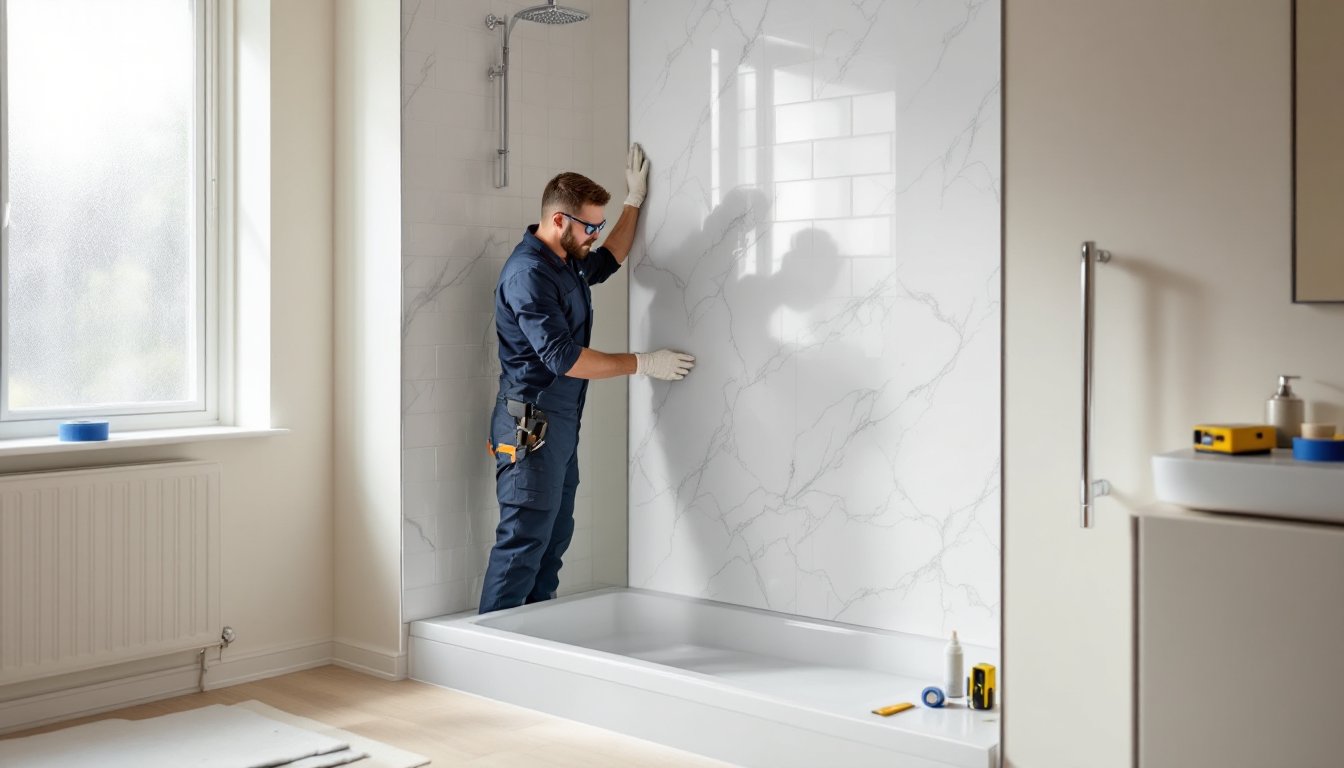
Bath Fitter specializes in custom-molded acrylic shower and tub liners that install directly over your existing fixtures. Instead of tearing out tile, replacing the pan, or moving plumbing lines, a Bath Fitter installer measures your current shower footprint, fabricates a one-piece or multi-piece acrylic surround at an off-site facility, and then fits it over the old structure.
The system typically includes wall panels, a low-threshold or zero-threshold base, and integrated accessories like soap dishes, corner shelves, and grab bars. Everything is bonded with construction adhesive and sealed with silicone. Because it’s an overlay rather than a replacement, the existing drain and valve assembly usually stay in place (though trim and fixtures can be updated).
This method works for both tub-to-shower conversions and shower-to-shower updates. If you’re converting a tub, the installer removes the tub surround and fixtures but leaves the underlying framing and drain intact. The new shower base sits on the subfloor where the tub used to be, and the acrylic walls cover the old tile or fiberglass.
Key Features and Design Options
Bath Fitter’s catalog offers more variety than the standard builder-grade fiberglass insert, but you won’t get the unlimited tile palette of a custom remodel. Wall panels come in solid colors, faux stone patterns, and subway tile prints. Most homeowners stick with neutral tones, white, almond, gray marble effects, that won’t clash with future decor.
Bases are available in standard sizes to fit 60″ x 32″ alcoves, corner units, and neo-angle configurations. Low-threshold models sit 3–5 inches off the floor for easier entry, while barrier-free options allow wheelchair or walker access. If you’re aging in place or planning for future mobility needs, this is worth specifying upfront.
Integrated accessories include corner caddies, fold-down seats, and ADA-compliant grab bars. These are molded into the wall panel during fabrication rather than drilled in afterward, which prevents water intrusion and eliminates the silicone-caulk maintenance cycle around aftermarket shelves.
Valve trim and showerheads are not included in the base package. You’ll need to source those separately or upgrade through Bath Fitter’s catalog. If you want a rain head, handheld wand, or thermostatic valve, confirm compatibility before the install date.
Installation Process and Timeline
The advertised “one-day install” is realistic for straightforward replacements, no structural repairs, no plumbing reroutes, no surprises behind the walls. Here’s how it typically unfolds:
- In-home consultation: A rep measures your existing shower or tub, discusses design options, and provides a quote. This visit takes 60–90 minutes.
- Fabrication: Your custom acrylic panels are manufactured off-site. Lead time varies by region but averages 2–4 weeks.
- Prep day (sometimes): If you’re converting a tub to a shower, the crew may remove the old tub and fixtures on day one, then return the next day for the acrylic install.
- Install day: The team positions the base, adheres wall panels with construction adhesive, trims edges, and seals all seams with silicone. Total time on-site: 6–10 hours for a standard alcove shower.
- Cure time: The adhesive needs 24 hours to set. You can use the shower the next day.
Bath Fitter handles removal of old fixtures and hauls away debris, but they don’t repair rotted subfloors, move plumbing lines, or address mold remediation. If the installer discovers water damage during demo, expect a pause while you hire a carpenter or plumber to make structural repairs. Always ask about contingency policies before signing.
Cost Breakdown: What to Expect
Pricing is not published online. Bath Fitter uses an in-home quote model, and costs vary by region, shower size, and design complexity. Based on data from homeowner cost guides and third-party reviews, expect to pay $4,000–$10,000 for a standard walk-in shower conversion.
Factors that push cost higher include:
- Tub-to-shower conversions (requires additional demo and a new base)
- Custom colors or upgraded patterns (marble effects, subway tile prints)
- Accessibility features (grab bars, fold-down seats, barrier-free thresholds)
- Valve and fixture upgrades (thermostatic controls, rain heads)
Bath Fitter typically includes a lifetime warranty on materials and installation, which covers delamination, cracking, and discoloration. Labor for repairs is included. This is a selling point compared to DIY tile jobs, where grout and waterproofing failures are common after 5–10 years.
For perspective, a mid-range custom tile shower, including demolition, new pan, cement backer, tile, grout, glass door, and labor, runs $5,000–$12,000 in most markets, with a 2–3 week timeline. According to recent reports from contractor matching services, Bath Fitter’s pricing lands in the middle of that range but compresses the schedule significantly.
Pros and Cons for Homeowners
Pros:
- Speed: One-day install means minimal disruption if you only have one bathroom.
- No demo mess: Overlay method eliminates tile dust, dumpster rental, and subfloor repairs (if the structure is sound).
- Warranty coverage: Lifetime guarantee on materials and labor reduces long-term maintenance risk.
- Water-tight seams: One-piece or multi-piece construction with bonded seams eliminates grout lines and the mold issues that come with them.
- Accessibility options: Low-threshold and barrier-free bases are easier to integrate than retrofitting a tile shower.
Cons:
- Limited design flexibility: You’re choosing from a catalog, not creating a custom tile mosaic or unique niche layout.
- Adds thickness: Acrylic panels install over existing walls, which can reduce interior shower dimensions by 1–2 inches per wall. Measure carefully if space is tight.
- Not a structural fix: If your subfloor is rotted, studs are water-damaged, or the drain is failing, Bath Fitter won’t address it. You’ll need to hire a contractor first.
- Resale perception: Some buyers prefer the look of real tile. Acrylic overlays can read as “budget remodel” in higher-end markets.
- Non-transferable warranty: The lifetime guarantee typically applies only to the original homeowner.
If you’re planning to sell within a few years, a neutral tile job may offer better ROI. If you’re aging in place and prioritize safety and low maintenance, the Bath Fitter system makes more sense.
How Bath Fitter Compares to Traditional Shower Remodels
A traditional remodel gives you complete control over materials, layout, and finishes. You can move the showerhead, add a built-in bench, install a linear drain, or use large-format porcelain slabs. You’ll also fix any underlying issues, replace rotted studs, upgrade to copper or PEX supply lines, and install a modern Schluter or Wedi waterproof membrane under the tile.
That flexibility comes at a cost. Demo and disposal add labor hours. Tile and grout require skilled installation and a multi-day cure schedule. If the contractor discovers plumbing issues or code violations, timelines stretch. Many home service reviews report that bathroom remodels run 10–20% over budget due to unforeseen repairs.
Bath Fitter trades design freedom for predictability. You won’t get a magazine-worthy custom shower, but you also won’t live with a torn-apart bathroom for three weeks or deal with change orders. The acrylic system is a solid middle ground for homeowners who want a functional, durable upgrade without the chaos of a gut job.
One overlooked consideration: permits. Most jurisdictions require a permit for plumbing and structural work, even on remodels. Bath Fitter installs are often classified as “fixture replacement” rather than new construction, which may exempt them from permitting in some areas. Check with your local building department before assuming you’re in the clear.
Conclusion
Bath Fitter’s walk-in shower system works best for homeowners who need a fast, low-mess upgrade and value warranty coverage over design flexibility. It’s a practical solution for aging-in-place retrofits, single-bathroom homes, or rental properties where durability matters more than aesthetics. Just confirm your subfloor and framing are sound before you schedule the install, no overlay system can fix structural rot.