A pool deck isn’t just the frame around your water, it sets the tone for your entire outdoor space. Modern pool decks emphasize clean lines, durable materials, and functional design that complements contemporary homes. Whether you’re building new or renovating an aging surround, today’s options blend aesthetics with practicality. This guide walks through material choices, design strategies, and budget considerations to help homeowners create a pool deck that looks sharp and stands up to sun, chlorine, and foot traffic.
Table of Contents
ToggleKey Takeaways
- Modern pool deck ideas emphasize clean lines, neutral color palettes, and durable materials like concrete, porcelain pavers, and composite decking that complement contemporary homes.
- Proper slope (1/4 inch per foot), non-slip ratings, and integrated drainage are critical safety features that prevent water pooling, algae growth, and slip hazards on any pool deck surface.
- Concrete and large-format pavers offer versatility and contemporary appeal, while natural wood decking provides warmth—choose materials based on climate, maintenance tolerance, and architectural style.
- LED low-voltage lighting systems (12V or 24V) must meet NEC Article 680 requirements and should be installed by a licensed electrician to ensure safety around wet areas.
- Budget-friendly options include stamped concrete ($8–$12/sq ft), standard pavers over sand, and pressure-treated wood, which can achieve modern aesthetics without premium material costs.
- Minimalist landscaping with structural plants and strategic lighting softens hard edges and transforms your pool deck into an evening destination without creating clutter or maintenance headaches.
What Makes a Pool Deck Modern?
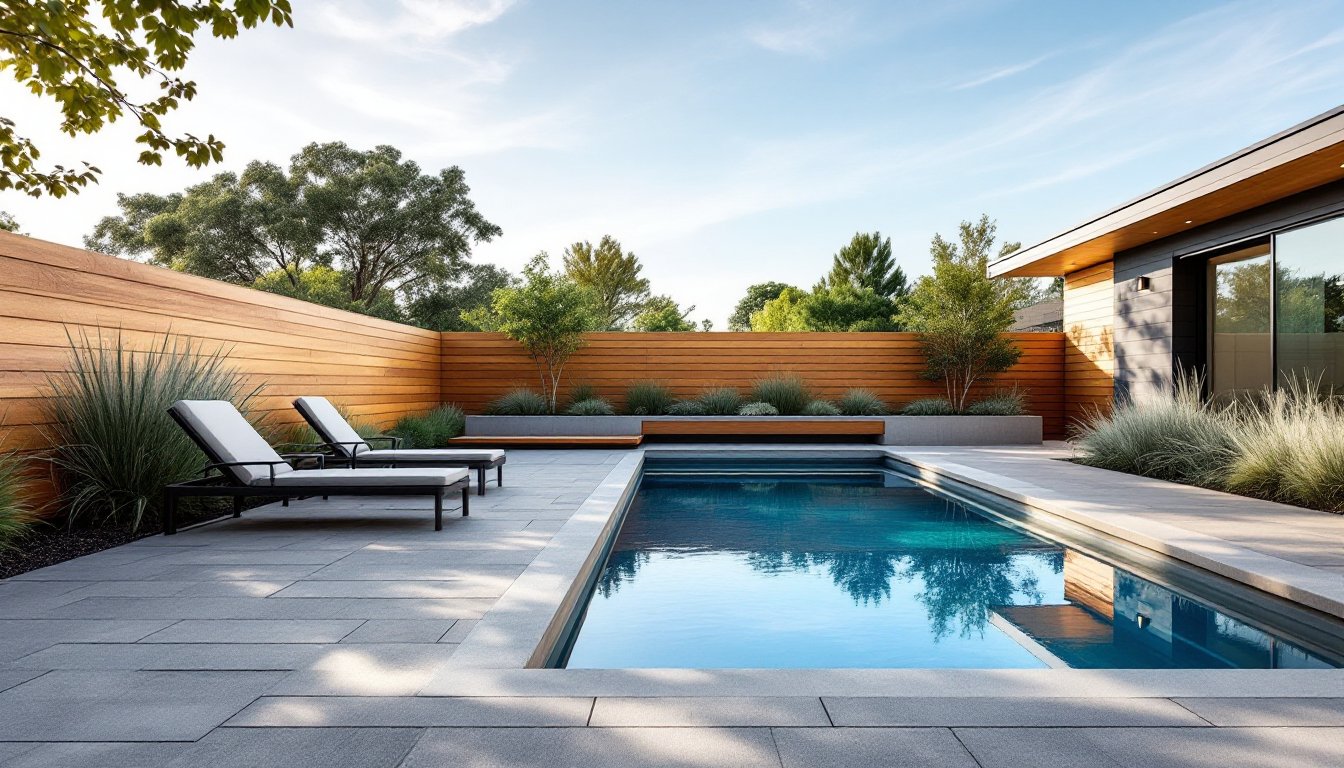
Modern pool deck design revolves around simplicity, horizontal lines, and materials that highlight texture rather than ornament. Think large-format pavers, smooth concrete slabs, or plank-style decking with consistent spacing. Color palettes skew neutral, grays, taupes, charcoal, warm whites, and natural wood tones dominate.
Key characteristics include:
- Minimal grout lines or seamless surfaces that create visual calm
- Geometric layouts with straight edges and 90-degree corners (or deliberate asymmetry in high-design builds)
- Integrated features like flush lighting, built-in seating, or hidden drainage channels
- Low-profile railings and furniture that don’t compete with sightlines
Modern doesn’t mean cold. Natural materials, wood, stone, concrete, bring warmth when chosen in earth tones or left unsealed for patina. The goal is restraint: every element should serve a function or enhance the overall form. Avoid fussy borders, clashing tile patterns, or decorative stamping that reads dated. If your home has modern or transitional architecture, carry that language outdoors through material and layout choices.
Sleek Concrete and Pavers for Contemporary Appeal
Poured concrete remains a go-to for modern pool decks due to its versatility, durability, and clean finish. A broom finish provides slip resistance without texture overload: exposed aggregate adds subtle visual interest and better traction in wet areas. Expect coverage around 80–100 square feet per cubic yard for a standard 4-inch slab. Joints should be placed every 10 feet to control cracking, and rebar or wire mesh reinforcement is non-negotiable on any deck subject to freeze-thaw cycles.
Concrete can be tinted in the mix or stained after curing. Acid stains yield variegated, natural-looking tones: water-based stains offer more uniform color. Sealing every 2–3 years protects against chlorine splash, UV fading, and staining.
Large-format pavers, typically 24×24 inches or larger, deliver a modern aesthetic with easier installation than poured slabs. Porcelain pavers have surged in popularity: they’re dense, fade-resistant, and available in wood-look or stone-look finishes. Installation over a compacted gravel base and 1-inch sand bed allows for some movement without cracking. Polymeric sand in joints resists washout and deters weeds.
For regions prone to settling or freeze-thaw, pavers offer a repair advantage: lift and reset individual units rather than saw-cutting and patching concrete. Consider a pedestal system for rooftop or elevated pool decks, adjustable pedestals create a level surface over sloped substrates and hide utilities underneath.
Always specify non-slip ratings (DCOF of 0.42 or higher for wet areas per ANSI standards). Smooth porcelain may look sleek but becomes a liability poolside without proper texture.
Natural Wood and Composite Decking
Wood decking brings warmth and a tactile quality that pairs beautifully with modern architecture, especially when homes feature wood siding or beams. Species matter: Ipe, cumaru, and tigerwood are dense tropical hardwoods that resist rot, insects, and UV damage for 25+ years with minimal maintenance. Expect to pay $8–$15 per board foot. These woods weather to silver-gray unless treated annually with penetrating oil.
Pressure-treated southern yellow pine is budget-friendly but requires regular sealing and won’t last as long in direct chlorine exposure. Cedar and redwood offer natural rot resistance and a lighter color palette but need more frequent refinishing.
Install wood decking with hidden fasteners (like Cortex or Tiger Claw systems) to eliminate visible screws and maintain clean lines. Run boards parallel to the pool edge for a streamlined look. Leave 1/8-inch gaps between boards for drainage and expansion: wood moves with humidity changes.
Composite decking (wood fiber and polymer blends) eliminates the maintenance headache. Premium brands like Trex, TimberTech, and Fiberon offer capped composites with a protective shell that resists fading, staining, and mold. Modern composites come in matte finishes and variegated colors that mimic hardwood grain without the glossy plastic look of older products.
Composites expand and contract with temperature swings, sometimes more than wood, so follow manufacturer spacing guidelines (often 1/4 inch at ends). Use stainless steel fasteners near chlorinated water: regular deck screws corrode quickly. While composites don’t splinter, they can get hot underfoot in direct sun. Lighter colors (grays, tans) stay cooler than dark browns or charcoals.
Both wood and composite work well with weekly pool maintenance routines, as they tolerate occasional chemical splash better than some tile or stone finishes.
Minimalist Stone and Tile Designs
Natural stone, bluestone, limestone, travertine, granite, delivers the organic texture and color variation that define high-end modern pools. Thermal-finished or flamed granite provides slip resistance without looking rough-hewn. Bluestone (a dense sandstone) is popular in the Northeast for its durability and blue-gray tones. Travertine stays cooler than granite or concrete in hot climates, thanks to its porous structure, but requires sealing to prevent staining and algae growth in joints.
Stone is typically sold in 12×24-inch or 24×24-inch pieces for a contemporary look. Random or irregular flagstone reads more rustic: save that for cottage or Mediterranean styles. Install over a 4-inch concrete base with thinset mortar (polymer-modified for exterior use). Joints should be 3/8 to 1/2 inch wide, filled with sanded grout or mortar.
Porcelain and ceramic tile work well in warm climates with minimal freeze-thaw. Large-format rectified tiles (edges cut square) allow for 1/8-inch grout lines, creating a nearly seamless surface. Porcelain is denser and less porous than ceramic, making it more frost-resistant, though neither is ideal for harsh winter regions without proper slope and drainage. Efflorescence, white salt deposits, can appear on tile and stone: it’s cosmetic but persistent in areas with hard water or poor drainage.
Slope the deck 1/4 inch per foot away from the pool to prevent standing water. This is especially critical with stone and tile, which can harbor algae and become slippery if water pools. Homeowners seeking more involved upkeep guidance will find pool maintenance basics helpful when managing water chemistry around porous materials.
Bullnose or rounded coping at the pool edge softens the transition and reduces sharp edges. Modern installs often use the same material for coping and decking to maintain visual continuity.
Integrating Lighting and Landscaping
Lighting transforms a pool deck from daytime amenity to evening destination. LED strip lighting recessed into deck boards, stair risers, or beneath coping creates ambient glow without glare. Use 12-volt or 24-volt low-voltage systems for safety around water: all outdoor electrical work near pools must meet National Electrical Code (NEC) Article 680 requirements for wet locations. Hire a licensed electrician, this isn’t a DIY project.
Path lights or bollards along walkways prevent trips and define circulation. Modern fixtures come in matte black, bronze, or stainless finishes with integrated LEDs rated for 25,000+ hours. Smart systems (Lutron, Hue Outdoor) allow dimming and color changes via app, though white or warm white (2700–3000K) typically looks best for residential pools.
Drainage around lighting is critical. Water infiltration is the #1 cause of fixture failure. Use silicone-sealed junction boxes and ensure all connections are above grade or in weatherproof enclosures.
Landscaping softens hard edges and provides privacy. Modern pool decks favor structural plants, ornamental grasses (like fountain grass or blue fescue), clumping bamboo, agave, or yucca, over fussy perennials. Plant in raised planters or cut pockets in the deck to avoid root heave. Leave at least 3 feet between plantings and the pool edge to reduce leaf litter and maintenance.
Avoid messy trees (mulberry, cottonwood, fruit trees) near pools. They drop debris and attract pests. Evergreens and palms suit modern aesthetics and shed less seasonally. Drip irrigation simplifies watering and keeps runoff from muddying the deck. Resources from Sunset often showcase western landscaping ideas that pair well with contemporary pool designs.
Consider a single focal plant or sculpture rather than cluttering the space. Modern design rewards restraint.
Budget-Friendly Modern Pool Deck Options
Modern doesn’t have to mean expensive. Stamped concrete mimics stone, wood, or tile at a fraction of the cost, typically $8–$12 per square foot installed versus $15–$25 for natural materials. Choose subtle patterns (wood plank, ashlar slate) and neutral tones to avoid the dated look of heavily embossed designs. Sealers need reapplication every 2–3 years to maintain color and protect against spalling.
Pavers over sand (instead of mortar over concrete) reduce labor and material costs. You can DIY the install if you’re comfortable with layout and leveling. Rent a plate compactor ($50–$75/day) to compact the base, skipping this step leads to settling and uneven surfaces. Standard concrete pavers run $3–$6 per square foot: porcelain bumps that to $10–$18.
Pressure-treated wood is the most affordable decking material at $2–$4 per square foot for materials. Installation is straightforward: joists on 16-inch centers over concrete footings or adjustable pedestals. Apply a water-repellent stain within a few weeks of install and reapply every 2–3 years. Expect a lifespan of 10–15 years with diligent upkeep.
DIY concrete pours can save thousands if you have experience with screeding and finishing. Ready-mix concrete costs around $120–$150 per cubic yard delivered (minimum order often 1 yard). For a 300-square-foot deck at 4 inches thick, you’ll need roughly 3.7 yards. Factor in forms, rebar, tools, and a couple of helpers, wet concrete doesn’t wait.
Paint or stain existing concrete for a refresh. Concrete deck coatings (like Behr or Rust-Oleum products) run $30–$60 per gallon and cover roughly 100 square feet. Proper surface prep, pressure washing, etching, and crack repair, determines longevity. Neglecting prep leads to peeling within a season.
Phase the project. Pour or pave the pool perimeter first, then extend the deck over subsequent seasons as budget allows. Just plan the layout upfront so additions blend seamlessly. Regional factors matter: material and labor costs vary widely, and local codes may mandate specific base depths or frost footings. Always call 811 before digging.
Conclusion
A modern pool deck blends form, function, and durability into a space that elevates everyday use and entertaining. Whether you choose sleek concrete, natural wood, stone, or budget-friendly alternatives, prioritize proper drainage, slip resistance, and weather-appropriate materials. Tackle prep work methodically, respect code requirements, and don’t skip safety measures. The result is a backyard centerpiece that performs as well as it looks, season after season.