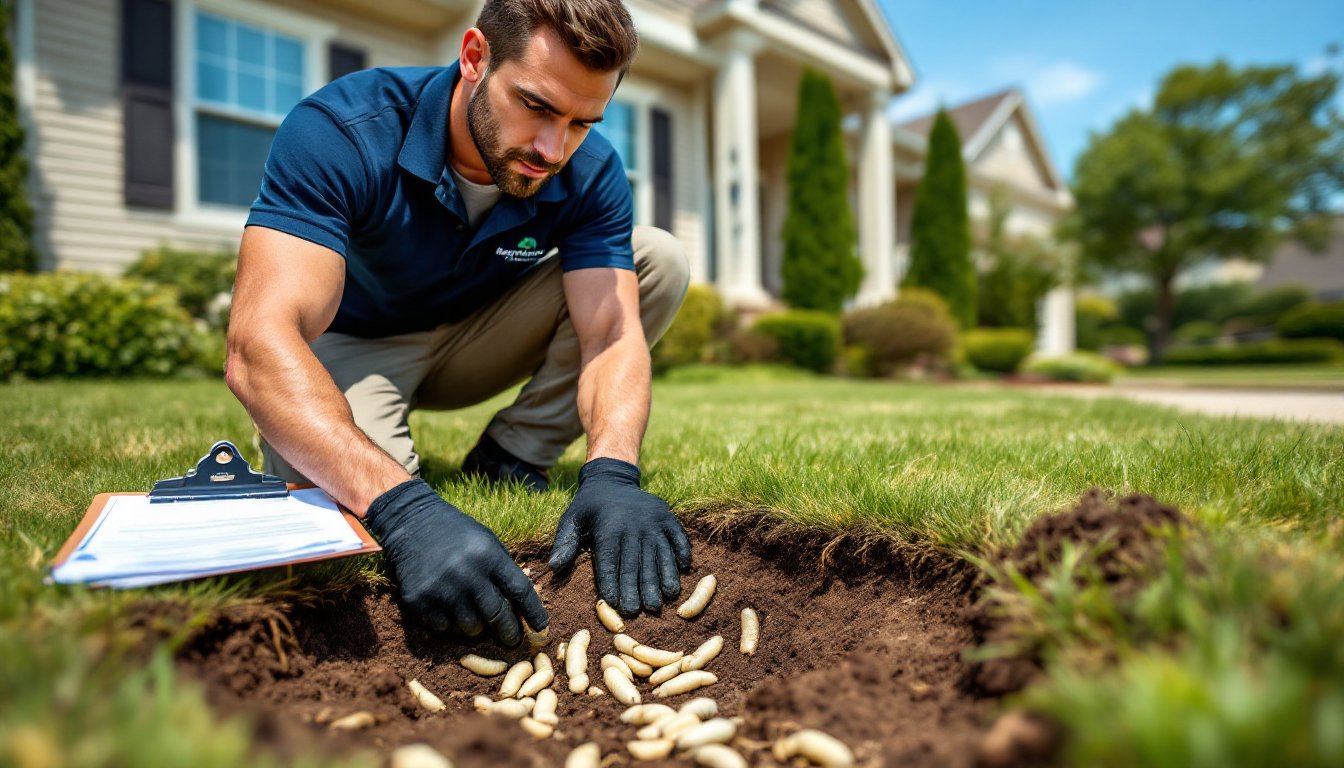
White grubs are one of the most destructive lawn pests in North America, and chances are if you’re searching for grub control near you, your lawn is already showing signs of damage. These C-shaped larvae feed on grass roots beneath the surface, creating brown patches that peel back like carpet and attract secondary damage from animals digging for a meal. The good news? Grub problems are manageable with the right approach, whether that’s a DIY treatment or calling in a professional grub control service. This guide walks through identifying grub damage, weighing your options, and finding reliable help in your area.
Table of Contents
ToggleKey Takeaways
- Grub control near me is essential when lawns show irregular brown patches, spongy turf, or increased animal digging—signs that grub populations exceed the damage threshold of 10 per square foot.
- DIY grub control works for lawns under 5,000 square feet if caught early, using preventive products in late spring or curative treatments in late summer, but professional services offer commercial-grade solutions for severe infestations.
- Finding a reliable grub control service requires verifying state licensing, requesting product information and guarantees, checking online reviews, and getting written estimates from at least three providers.
- Professional grub control typically costs $75–$500+ depending on lawn size and severity, with bundled annual lawn care packages ($400–$800) offering better long-term value than single treatments.
- Prevent future grub infestations by applying preventive grubicides in late May to June, aerating in fall, watering deeply but infrequently, and monitoring for adult beetles—the key to lasting lawn health.
- Beneficial nematodes offer an organic grub control alternative for homeowners seeking integrated pest management, parasitizing grubs safely without harming humans, pets, or pollinators.
What Are Grubs and Why Do They Damage Your Lawn?
Grubs are the larval stage of several beetle species, most commonly Japanese beetles, June bugs, and European chafers. They hatch from eggs laid in turf during mid to late summer, then burrow 1–3 inches into the soil to feed on grass roots from late summer through fall. In spring, they resume feeding before pupating into adult beetles.
A healthy lawn can tolerate 5 grubs per square foot without visible damage. Once populations exceed 10 per square foot, root damage becomes severe enough to kill large patches of turf. The grass loses its ability to uptake water and nutrients, resulting in irregular brown areas that worsen during heat or drought stress.
Grubs are most active in cool, moist soil. They migrate deeper (up to 8 inches) when the ground freezes or during dry spells, making timing critical for effective control. Lawns with heavy thatch, compacted soil, or poor drainage are more susceptible to infestations, since beetles prefer moist conditions for egg-laying.
Signs You Need Grub Control Services
Grub damage often gets mistaken for drought stress or disease until it’s too late. Here’s what to look for:
Brown, irregular patches that appear in late summer or early fall, especially in sunny areas. Unlike drought stress, these patches don’t green up after watering.
Spongy or loose turf that peels back easily when you tug on it. If the grass lifts like a section of carpet with no root resistance, grubs have likely severed the roots.
Increased animal activity. Skunks, raccoons, and crows tear up lawns to feed on grubs. If you’re seeing fresh divots and torn sod in the early morning, you’ve got a grub problem underneath.
Beetles swarming in summer. Adult Japanese beetles and June bugs congregate on turf to mate and lay eggs from late June through August. Heavy beetle activity is a predictor of future grub populations.
To confirm, cut a 1-square-foot section of turf about 3 inches deep using a spade. Peel it back and count the grubs in the soil. More than 10 per square foot means you need intervention, either DIY treatment or a grub control company.
Many homeowners follow comprehensive lawn care guides to identify pest issues, but grub damage is unique because it happens underground and progresses quickly once visible.
DIY vs. Professional Grub Control: Which Is Right for You?
DIY grub control works if you catch the problem early and have a lawn under 5,000 square feet. The two main product types are:
Preventive grubicides (applied in late spring to early summer before eggs hatch). Look for products containing imidacloprid or thiamethoxam. These are systemic insecticides absorbed by grass roots. Apply with a broadcast spreader, water in with at least 0.5 inches of irrigation, and avoid mowing for 24 hours. Cost runs $30–$60 for a 5,000-square-foot bag.
Curative grubicides (applied in late summer to early fall when grubs are actively feeding). Products with trichlorfon (sold as Dylox) or carbaryl work fast but require precise timing. Grubs must be small (less than 0.5 inches) and near the surface. Water in immediately after application.
When to call a professional grub control service:
- Lawn exceeds 10,000 square feet or has complex terrain (slopes, landscaping beds, irrigation systems).
- Grub population is severe (15+ per square foot) and damage is widespread.
- You’ve tried DIY treatment without success.
- You want season-long lawn care that includes fertilization, aeration, and integrated pest management.
Professional grub control services use commercial-grade products not available to consumers, apply treatments with calibrated equipment, and often guarantee results. They’ll also assess soil health, thatch buildup, and other factors that contribute to infestations, which is something regional landscaping resources emphasize for Western and Midwestern lawns.
How to Find the Best Grub Control Services in Your Area
Start with a search for “grub control service near me” or “grub control services [your city]” to generate local results. Look for lawn care companies, pest control providers, or landscape maintenance firms that list grub treatment as a core service.
Key questions to ask when vetting providers:
- Are you licensed and insured? Pesticide applicators must hold state licenses in most jurisdictions. Ask for proof.
- What products do you use? Request the active ingredient and application rate. Avoid vague answers.
- Do you offer a guarantee? Reputable companies stand behind their work with a re-treatment clause if grubs return within the season.
- Is treatment part of a full lawn care plan? Many grub control companies bundle treatment with fertilization, aeration, and overseeding for better long-term results.
Red flags:
- No written estimate or contract.
- Pushy sales tactics or “limited-time” pressure.
- Refusal to provide product labels or safety data sheets (SDS).
- No mention of follow-up inspections or monitoring.
Check online reviews on Google, Yelp, and the Better Business Bureau. Pay attention to complaints about missed appointments, ineffective treatments, or damage to landscaping. A company with consistent 4+ star ratings and responsive customer service is a safer bet.
Another solid approach is asking neighbors or local garden clubs for referrals. Word-of-mouth recommendations often surface reliable providers who’ve worked in your area for years and understand regional grub species and soil conditions.
What to Expect from Professional Grub Treatment
A professional grub control service will typically schedule a site inspection before treatment. The technician will walk your property, check for grub activity, assess turf health, and identify any secondary issues (compaction, poor drainage, thatch).
Treatment day involves applying a liquid or granular grubicide using a boom sprayer or broadcast spreader. The technician will mark treated areas and provide a re-entry time (usually 2–4 hours for granular products, up to 24 hours for liquids). Keep kids and pets off the lawn during this window.
Most companies water in the product if you don’t have an irrigation system. Expect 0.5 to 1 inch of water applied immediately after treatment to move the insecticide into the root zone where grubs feed.
Follow-up: A quality grub control company will return 3–4 weeks after treatment to inspect results and re-treat if necessary at no extra charge. Some offer seasonal monitoring as part of an annual lawn care contract.
Cost of Grub Control Services: What to Budget
Professional grub control services typically charge by the square footage of treatable turf. National averages in 2026 run:
- $75–$150 for up to 5,000 square feet (single application).
- $150–$300 for 5,000–10,000 square feet.
- $300–$500+ for larger properties or severe infestations requiring multiple treatments.
Some grub control companies offer bundled lawn care packages that include grub prevention, fertilization, weed control, and aeration. These typically cost $400–$800 annually for an average suburban lot (10,000 sq ft) and provide better value than à la carte treatments.
Cost variables:
- Product type. Preventive treatments (imidacloprid, chlorantraniliprole) cost less per application but must be timed precisely. Curative products (trichlorfon) are more expensive but work faster.
- Application method. Liquid applications require more labor and equipment, increasing cost by 20–30% compared to granular treatments.
- Geographic region. Grub pressure is highest in the Midwest, Northeast, and Pacific Northwest, where beetle populations are dense. Expect slightly higher pricing in these areas.
- Property access. Slopes, dense landscaping, or limited access for equipment can add $50–$100 to the quote.
Always get written estimates from at least three providers before committing. Be wary of quotes significantly below the market average, they often signal diluted products, unlicensed applicators, or no guarantee.
Preventing Future Grub Infestations in Your Yard
Once you’ve knocked down an active infestation, prevention is key. Grubs return year after year if conditions remain favorable for beetle egg-laying.
Apply a preventive grubicide in late May to early June. This targets eggs and newly hatched larvae before they can damage roots. Products with chlorantraniliprile (trade name: Acelepryn) offer season-long protection and are low-toxicity to pollinators.
Aerate and overseed in fall. Core aeration relieves soil compaction, improves drainage, and makes your lawn less attractive to egg-laying beetles. Follow up with a quality turf-type tall fescue or perennial ryegrass blend to thicken turf and outcompete weak areas where beetles prefer to lay eggs.
Water deeply and infrequently. Beetles are drawn to moist soil. Watering 1–1.5 inches per week in one or two sessions (rather than daily light watering) keeps roots healthy without creating a beetle magnet.
Reduce outdoor lighting in summer. Adult beetles are attracted to lights at night. Use yellow bug lights or motion sensors to minimize activity around your property during peak beetle season (late June through July).
Monitor for adult beetles. If you see heavy beetle feeding on ornamental plants (roses, linden trees, grapes), expect grub problems 4–6 weeks later. Hand-pick beetles in the morning when they’re sluggish, or use pheromone traps placed at the edge of your property (not in the middle of the lawn, which draws more beetles in).
For gardeners interested in integrated pest management and organic lawn care, expert gardening resources often recommend beneficial nematodes (Heterorhabditis bacteriophora) as a biological control. These microscopic worms parasitize grubs and are safe for humans, pets, and beneficial insects. Apply in late summer when soil temps are above 50°F and keep the lawn moist for 2 weeks post-application.
Final word: Grub control is most effective when you combine smart timing, the right product, and good cultural practices. Whether you go DIY or hire a grub control company, consistency and monitoring are what keep your lawn healthy long-term.