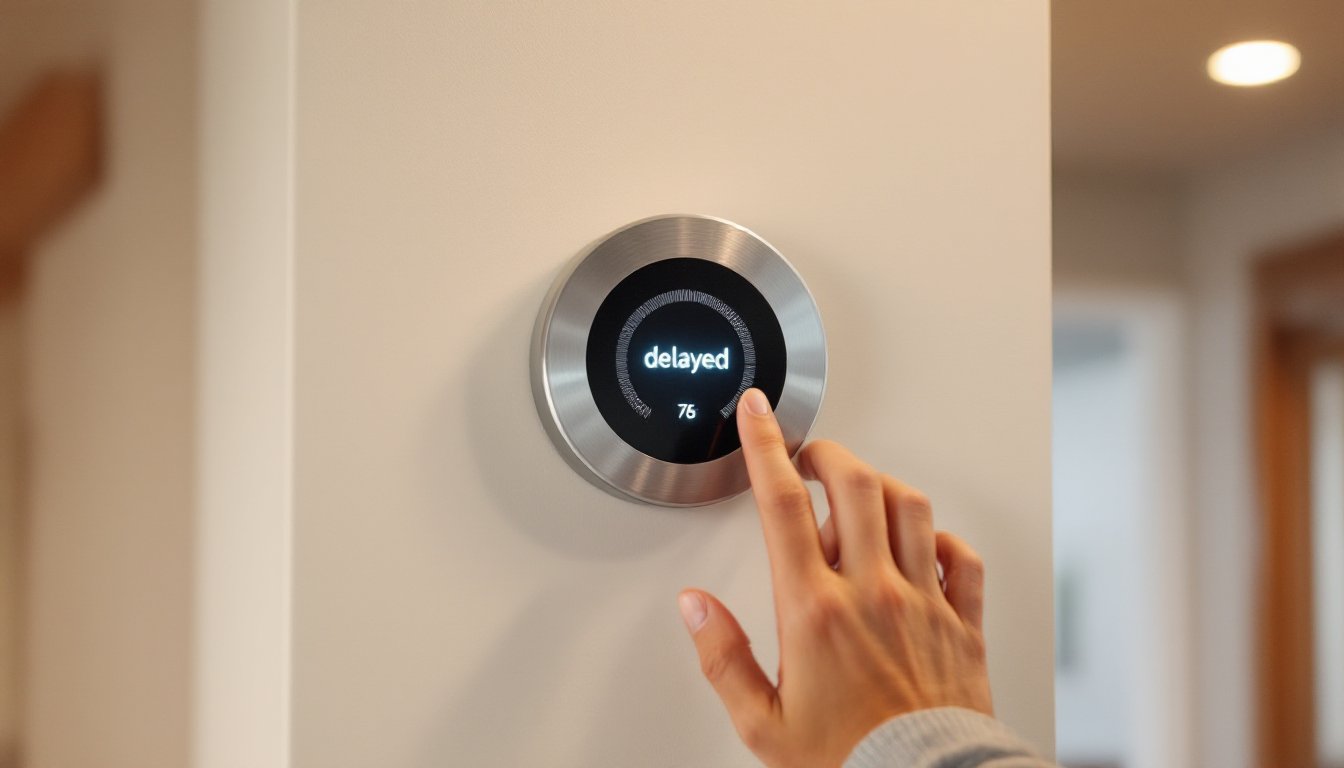
Staring at a “Delayed” message on a Nest thermostat while the house heats up or cools down too slowly isn’t just frustrating, it can leave a homeowner questioning whether the system’s broken or if they wired something wrong during installation. This delay notification is actually a built-in feature, not a malfunction, but understanding why it appears and what triggers it can help resolve the issue quickly. Whether the problem stems from insufficient power, a safety feature kicking in, or a mismatch between the HVAC system and the thermostat’s wiring, there are practical fixes that don’t require a service call. This guide walks through the causes, troubleshooting steps, and prevention strategies to get heating or cooling back on schedule.
Table of Contents
ToggleKey Takeaways
- A ‘Delayed’ message on your Nest thermostat is a safety feature, not a malfunction, designed to prevent compressor damage by pausing HVAC activation for 1-5 minutes to stabilize system pressures.
- Insufficient power caused by a missing C-wire or undersized transformer is the most common cause of Nest thermostat delays; check voltage readings in Settings > Technical Info > Power to diagnose.
- Installing a C-wire or add-a-wire adapter kit is the most effective fix, taking 20-30 minutes and eliminating power-related Nest thermostat delays without requiring a service call.
- Regular HVAC maintenance—including filter replacement, coil cleaning, and refrigerant checks—prevents delays by keeping your system running efficiently and reducing protective safety lockouts.
- Verify your HVAC system type during Nest thermostat setup and ensure proper equipment sizing through a Manual J load calculation, as oversized or incorrectly configured systems trigger frequent delays.
What Does ‘Delayed’ Mean on Your Nest Thermostat?
The “Delayed” message on a Nest thermostat indicates the device has postponed turning on the heating or cooling system. This isn’t an error code, it’s a notification that the thermostat is waiting before activating the HVAC equipment, typically to protect the compressor or other components from damage.
Nest thermostats use an algorithm to prevent short cycling, which happens when a system turns on and off too frequently. Rapid cycling can wear out compressor motors, especially in air conditioning units and heat pumps. The delay, usually lasting 1 to 5 minutes, gives the system time to stabilize internal pressures before restarting.
Another common scenario involves low battery or insufficient power. If the thermostat’s internal battery is too low, it may delay HVAC activation until it has enough charge to safely operate the relay. This often occurs after a power outage, during initial installation, or when the C-wire (common wire) isn’t connected, forcing the unit to trickle-charge from the control wires.
Homeowners might also see “Delayed for 2 hours” (or similar), which points to a different issue: the system entering a safety lockout after detecting a problem, such as repeated failures to reach the set temperature or sensing a fault in the equipment. Understanding which type of delay message appears helps narrow down the root cause.
Common Causes of Nest Thermostat Delays
Power and Wiring Issues
Insufficient power is the most frequent culprit behind recurring “Delayed” messages. Nest thermostats require a steady voltage supply, and while they can operate without a C-wire by drawing power from the heating and cooling control wires, this setup often leads to power shortages, especially in systems with multi-stage heating, cooling, or humidifiers.
When the thermostat’s battery drops below a critical threshold (around 3.6V), it will delay system activation to preserve enough charge for the display and Wi-Fi connection. Check the Power settings in the Nest app or on the thermostat itself under Settings > Technical Info > Power. If the Voc (voltage from control wires) reads below 29V or the battery voltage is in the low range, there’s likely a wiring issue.
Common wiring problems include:
- Missing C-wire: The C-wire provides continuous 24V power. Without it, the thermostat relies on power stealing, which isn’t always adequate.
- Loose or corroded connections: Connections at the thermostat base or the HVAC control board can degrade over time, especially in humid environments like basements or attics.
- Undersized or damaged transformer: Older HVAC systems may have a 20VA transformer, which struggles to power modern smart thermostats. Nest recommends at least a 40VA transformer.
If wiring a C-wire isn’t feasible, consider installing a C-wire adapter kit (sometimes called an add-a-wire or power extender kit). These kits repurpose an unused wire, like the G-wire on systems without a fan control, to carry the common connection. Installation typically takes 20 to 30 minutes and requires basic electrical knowledge. Always shut off power at the breaker before touching HVAC wiring.
HVAC System Protection Features
Nest thermostats include built-in safety timers to protect HVAC equipment from damage. The most common is the compressor protection delay, which prevents the air conditioner or heat pump compressor from restarting immediately after shutting down. Compressors need time to equalize refrigerant pressures: starting them too soon can cause mechanical stress or electrical overload.
This delay is hardcoded into the thermostat and can’t be disabled, it’s there for good reason. But, if delays are frequent or longer than expected, the issue may lie with the HVAC system itself, not the Nest.
Other protection features that can trigger delays:
- Heat pump auxiliary heat lockout: Some systems delay switching to auxiliary or emergency heat to give the heat pump time to warm up the home on its own, which is more energy-efficient.
- Fan delay on cooling: After a cooling cycle ends, the fan may run for an extra minute or two to pull residual cold air from the ducts. The next cooling cycle won’t start until this process finishes.
- System error detection: If the Nest detects that the HVAC system repeatedly fails to reach the target temperature, it may enter a longer delay (often 1-2 hours) as a protective measure, assuming there’s a fault with the equipment. Check for error codes or alerts in the Nest app under Settings > Equipment.
If the system itself is aging or undersized for the space, delays may become more frequent as the equipment struggles to keep up with demand. In those cases, addressing the HVAC equipment, replacing a worn compressor or upgrading to a properly sized unit, will resolve the issue more effectively than adjusting the thermostat.
How to Troubleshoot and Fix Delayed Heating or Cooling
Start by checking the power status. Open the Nest app or navigate to Settings > Technical Info > Power on the thermostat display. Look for the Voc (voltage from control wires) and battery readings. Voc should be between 29V and 30V for most systems: anything below 27V indicates a power issue. Battery voltage should be above 3.7V under normal conditions.
If power is low, follow these steps:
- Inspect the wiring at the thermostat base: Pull the display off the base (it pops off with a gentle tug). Check that all wires are securely fastened in their terminals and that no bare wire is touching the backplate. Tighten any loose screws.
- Check the wiring at the HVAC control board: Turn off power at the breaker. Locate the control board (usually inside the furnace or air handler). Verify that the wires connected to the thermostat terminals (R, C, W, Y, G, etc.) are tight and free of corrosion. If the C-terminal is empty, that’s the source of the power issue.
- Install a C-wire or add-a-wire adapter: If no C-wire is present, either run a new 18/8 thermostat cable from the HVAC system to the thermostat (which may require fishing wire through walls) or install an adapter. Popular options include the Venstar ACC0410 or the Ecobee Power Extender Kit, though Nest also sells compatible adapters.
- Upgrade the transformer: If wiring is correct but power remains low, the transformer may be undersized. Replace a 20VA or 30VA transformer with a 40VA transformer rated for 24VAC. This is a straightforward swap, turn off power, disconnect the old transformer from the control board, and wire in the new one to the same terminals (usually labeled “R” and “C”). This work is within reach for a DIYer comfortable with basic electrical tasks, but if unsure, hire an HVAC tech.
Next, rule out system-specific issues by testing the HVAC equipment directly:
- Manually trigger a heating or cooling cycle: Go to the Nest and set the temperature well above (for heat) or below (for cooling) the current room temperature. Wait 5 minutes. If the system starts but the delay message persists, the thermostat may need a reset.
- Check air filters: A clogged filter reduces airflow, which can cause the system to overheat or freeze up, triggering safety shutdowns and subsequent delays. Replace disposable filters rated at MERV 8 to 11 every 1 to 3 months, depending on usage and household conditions (pets, allergies, etc.).
- Inspect the condensate drain (for cooling): If the drain line is clogged, a float switch may shut down the AC to prevent water damage. Clear the line with a wet/dry vacuum or a vinegar flush.
If delays continue after addressing power and basic HVAC maintenance, perform a factory reset on the Nest:
- Go to Settings > Reset > Restart first. This reboots the software without erasing settings.
- If that doesn’t help, choose Settings > Reset > Factory Reset. This wipes all configuration and requires re-setup, but it can resolve software glitches causing false delays.
- After reset, reconfigure the system using the Nest app. Make sure to accurately select the HVAC equipment type (conventional, heat pump, dual fuel, etc.) during setup. Incorrect configuration can cause the thermostat to misinterpret system signals and introduce unnecessary delays.
For persistent issues after all troubleshooting, consult resources like CNET’s Nest troubleshooting guide or Tom’s Guide on fixing Nest problems, which cover additional edge cases and firmware-related fixes. If the HVAC system itself is the problem, such as a failing compressor or refrigerant leak, the repair or replacement falls outside thermostat troubleshooting and requires a licensed HVAC contractor.
Preventing Future Delays with Your Nest Thermostat
Preventing delays starts with proper installation. If installing a new Nest or replacing an older thermostat, always run a C-wire if the HVAC system doesn’t already have one. The upfront effort, whether fishing a new cable or installing an adapter, eliminates the most common source of power-related delays.
Use 18-gauge, 8-conductor thermostat wire for new runs, even if only five or six conductors are needed currently. The extra wires provide flexibility for future upgrades, such as adding a humidifier, dehumidifier, or second-stage heating. Staple the cable every 16 inches along studs or joists, keeping it away from electrical wiring to avoid interference.
Schedule regular HVAC maintenance to keep the system running efficiently. A yearly tune-up by a licensed technician should include:
- Cleaning the evaporator and condenser coils
- Checking refrigerant levels and looking for leaks
- Inspecting electrical connections and tightening terminals
- Testing capacitors and contactors
- Verifying airflow and combustion (for furnaces)
Systems that run smoothly are less likely to trigger safety delays. Homeowners can handle some tasks themselves, like replacing filters and clearing drain lines, but compressor and refrigerant work requires EPA certification and specialized tools.
Keep the Nest firmware updated. The thermostat downloads updates automatically when connected to Wi-Fi, but if the network is spotty or the device is offline, updates may lag. Check for updates manually under Settings > Software > Update. Firmware updates often include improvements to power management and HVAC compatibility that can reduce unnecessary delays.
Monitor the Power settings periodically, especially after seasonal transitions when heating or cooling loads change. If Voc or battery voltage starts to drift lower, address it before delays become frequent. Many smart home tech sources recommend checking thermostat diagnostics at the start of each heating and cooling season.
Finally, avoid oversized HVAC equipment. An oversized furnace or AC unit will short-cycle, turning on and off rapidly, which not only triggers compressor delays but also reduces efficiency and comfort. When replacing HVAC equipment, insist on a proper Manual J load calculation to size the system correctly for the home’s square footage, insulation, windows, and climate zone. Properly sized equipment runs longer cycles, maintains more consistent temperatures, and experiences fewer protective delays.
Conclusion
A “Delayed” message on a Nest thermostat usually points to low power or built-in safety features doing their job, not a broken system. Fixing the issue typically involves checking wiring, installing a C-wire or adapter, and ensuring the HVAC equipment is well-maintained. With proper setup and regular upkeep, delays become rare, and the thermostat delivers the reliable, responsive climate control it was designed for.