An oval pool isn’t just a water feature, it’s a backyard centerpiece that deserves a deck design as unique as its shape. Unlike rectangular pools with straightforward borders, oval pools curve gracefully, presenting both challenges and creative opportunities for deck builders. The right deck transforms an above-ground oval pool into an integrated landscape element or elevates an in-ground installation from basic to resort-worthy. Whether homeowners are working with limited budgets or planning elaborate multi-tier constructions, the key is choosing materials and layouts that complement the pool’s flowing lines while meeting practical needs for safety, drainage, and durability.
Table of Contents
ToggleKey Takeaways
- Oval pool deck designs require curved cuts and radial joinery, making them more labor-intensive than rectangular pool decks but offering creative opportunities to integrate water features into landscaping.
- Material options range from budget-friendly pressure-treated wood ($15–25/sq ft) to durable tropical hardwoods and modern composites ($30–50/sq ft), each with distinct maintenance and longevity profiles.
- Deck width matters significantly—expand to 6–8 feet or more on your best-sun side to create functional lounging space, rather than settling for a minimal 2–3 foot border.
- Proper grading with a 1/4-inch-per-foot slope, sealed finishes on all hard surfaces, and textured or brushed material treatments prevent water damage, mold growth, and slipping hazards.
- Multi-level designs and partial decks maximize space and functionality while reducing material costs by 50–60% compared to complete oval surround installations.
- Always verify local building codes for guard rail height (typically 36 inches), frost line depth for post footings, and safety requirements before breaking ground on any pool deck project.
Why Oval Pools Deserve Custom Deck Designs
Oval pools require more thoughtful planning than their rectangular counterparts. The curved edges mean standard deck board layouts won’t work, builders need to account for radial cuts, taper joints, and the increased labor involved in fitting boards to a curve.
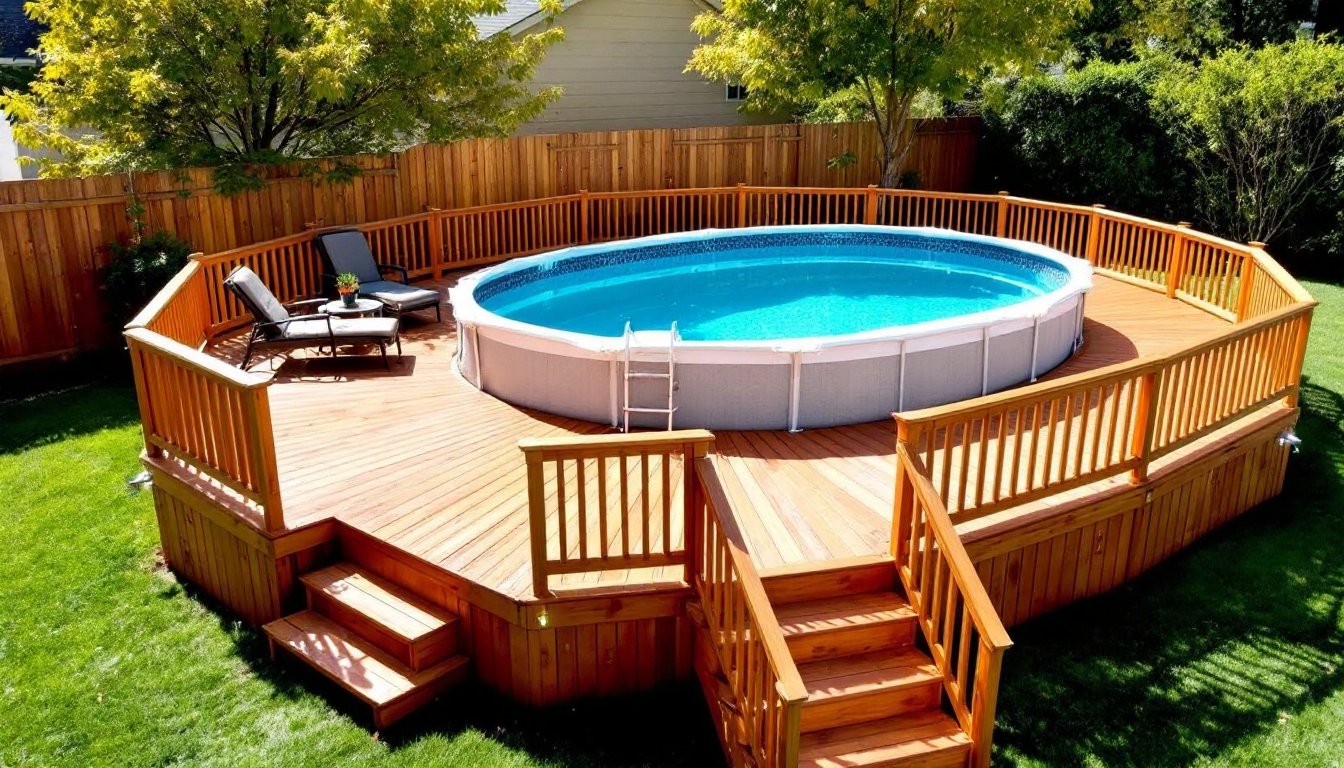
Above-ground oval pools present unique structural considerations. The deck must provide safe entry and exit points while supporting the outward pressure exerted by thousands of gallons of water. Most jurisdictions require guard rails at least 36 inches high around elevated decks, and some local codes mandate self-closing gates if children are present. Always verify requirements with the local building department before breaking ground.
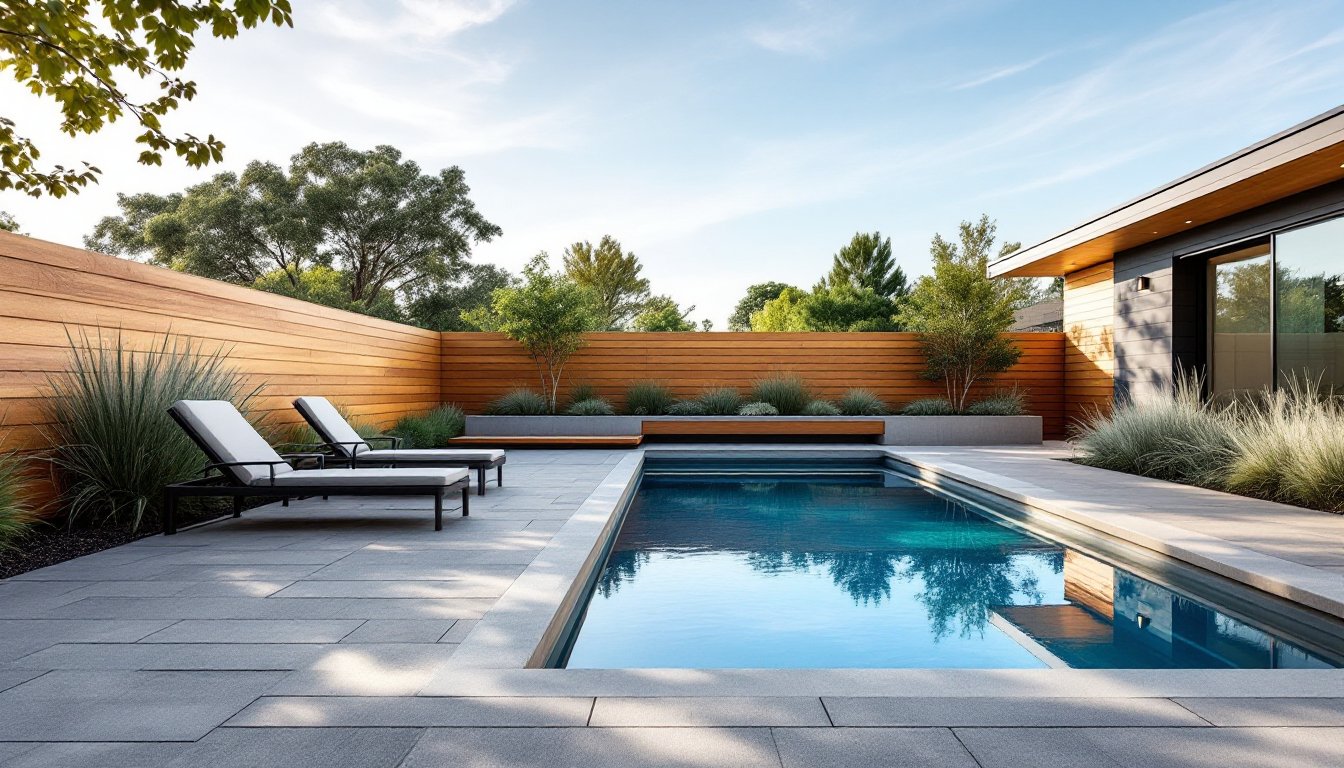
In-ground oval pools benefit from decks that soften the transition between water and yard. A well-designed surround creates usable lounging space, conceals equipment, and prevents grass clippings or dirt from washing into the pool. The goal is making the curve feel intentional rather than awkward.
Deck width matters. A narrow 2-3 foot border provides minimal function, just enough to walk around. Expanding to 6-8 feet or more on one side creates room for chairs, a table, or built-in benches. Prioritize the side with the best sun exposure or views when allocating space.
Classic Wood Decking for Timeless Appeal
Pressure-treated pine remains the most budget-conscious wood option, typically running $15-25 per square foot installed (regional costs vary). It resists rot and insects when properly maintained, though it requires annual staining or sealing to prevent warping and splinters. For oval decks, expect more waste due to curved cuts, order 15-20% extra material beyond calculated square footage.
Cedar and redwood offer natural rot resistance and richer color without chemical treatment. Both mill to smooth surfaces that feel pleasant underfoot, a real consideration around pools where people walk barefoot. Cedar costs roughly $25-35 per square foot installed. These softwoods dent more easily than treated lumber but age to attractive silver-gray patinas if left unsealed.
Tropical hardwoods like ipe, cumaru, or tigerwood deliver exceptional durability and require minimal maintenance. Ipe can last 25-50 years with only occasional cleaning. The tradeoff? Hardwoods cost $35-50+ per square foot and demand carbide-tipped saw blades plus pre-drilling for every fastener. Their density makes them slip-resistant even when wet, a major safety advantage for pool water management.
For curved sections, hidden fasteners create cleaner looks than face-screwing. Systems like Camo or Tiger Claw work with most wood species. Plan joist spacing at 12 inches on center rather than the standard 16 inches to provide adequate support where deck boards curve and terminate at odd angles.
Modern Composite and PVC Deck Solutions
Composite decking blends wood fiber and plastic polymers into low-maintenance boards that never need staining. Brands like Trex, TimberTech, and Fiberon offer capped composites with protective shells that resist fading, staining, and mold. Installed costs range $30-45 per square foot.
Composites simplify curved installations. Most manufacturers provide fascia boards that heat-bend to match oval contours, use a heat gun or let boards sit in direct sun to increase flexibility before installation. Some DIYers skip this step and accept slight gaps, but bending creates professional results.
One drawback: composites expand and contract more than wood with temperature changes. Leave 1/4-inch gaps between board ends and follow manufacturer spacing guidelines. In hot climates, dark composite colors absorb significant heat, surface temps can hit 120°F or higher on summer afternoons, hot enough to burn bare feet. Lighter colors or capped boards with heat-deflecting technology mitigate this issue.
PVC decking contains no wood fiber, making it completely waterproof and highly stain-resistant. Azek and Zuri are common PVC brands. It costs slightly more than standard composite ($35-50 per square foot) but performs exceptionally well in pool environments where water exposure is constant. PVC cuts and installs like wood but requires specific fasteners, stainless steel or coated screws prevent corrosion.
Both composite and PVC work well for homeowners seeking designs showcased in modern pool deck galleries featuring clean lines and minimal upkeep.
Stone and Pavers for Natural Elegance
Poured concrete provides the most economical hard surface at $6-12 per square foot for basic broom-finish installations. For oval pools, forming curved edges requires flexible form boards (1/4-inch hardboard works) or pre-bent aluminum edging. Stamped or stained concrete adds visual interest for $12-18 per square foot.
Concrete decks need proper slope, 1/4 inch per foot minimum, to shed water away from the pool. Control joints should be cut within 24 hours of pouring to direct inevitable cracking. In freeze-thaw climates, use air-entrained concrete mix and seal surfaces every 2-3 years.
Natural stone like bluestone, flagstone, or travertine creates high-end aesthetics. Travertine stays cooler underfoot than most materials, making it popular in hot regions. Costs run $20-40 per square foot installed, depending on stone type and thickness. Stone requires a stable base, typically 4-6 inches of compacted gravel topped with 1-2 inches of sand for dry-laid installations, or a concrete slab for mortared applications.
Pavers, whether concrete, clay, or porcelain, offer design flexibility with lower cost than natural stone ($12-25 per square foot). Their modular nature suits oval curves better than large-format tiles. Smaller pavers (4×8 inches) follow curves more smoothly than larger units. Use polymeric sand between joints to lock pavers in place and prevent weed growth.
All hard surfaces around pools should have textured or brushed finishes. Smooth stone or polished concrete becomes dangerously slippery when wet. For in-ground pools, ensure the deck slopes away from the pool coping to prevent runoff from carrying debris into the water, reducing time spent on routine pool cleaning.
Multi-Level Deck Designs That Maximize Space
Multi-level decks work especially well for above-ground oval pools or sloped yards. A raised platform at pool height with steps down to ground level creates distinct zones, swimming area, sunbathing deck, and yard access, without visual clutter.
Platform height for above-ground pools typically places the deck 4-6 inches below the pool rail, letting swimmers climb out easily while maintaining the required rail height for safety. Structural support becomes critical: deck posts should rest on concrete footings below frost line (varies by region, check local codes). Ledger boards attached to the pool frame must use lag bolts into steel uprights, never just into the pool wall itself.
Stair placement deserves careful thought. Position the main staircase on the side with easiest yard access. Stair treads should be at least 10 inches deep with 7-8 inch rises for comfortable climbing. Add lighting in risers or along handrails for nighttime safety.
Lower-level decks adjacent to in-ground ovals can incorporate built-in benches, planters, or even small outdoor kitchens. These areas don’t need the same water-resistant materials as the immediate pool surround, standard decking or even gravel patios work. The separation between wet and dry zones makes the space more functional.
Design inspiration often comes from outdoor living features that integrate pools with broader landscape plans. Consider sightlines from the house when planning levels, does the deck block views or frame them?
Budget-Friendly DIY Deck Ideas for Oval Pools
Building a deck for an oval pool doesn’t require contractor pricing if homeowners have basic carpentry skills. Pressure-treated lumber keeps material costs manageable, and above-ground pool manufacturers often provide free deck plans sized for their specific models.
Partial decks cut costs dramatically. Instead of surrounding the entire pool, build a platform on just one side, typically 8-12 feet wide, where the entry/exit point sits. This approach uses 50-60% less material while providing all essential functionality.
Tool requirements stay modest for basic builds. A circular saw handles all cuts, though a jigsaw makes curved trim work easier. Rent a power auger ($40-60 per day) for digging post holes rather than fighting with manual diggers. A speed square and chalk line keep framing square and straight.
Foundation work can’t be skipped. Set posts in concrete footings even for “temporary” decks. Deck blocks sitting on grade might work for very low platforms in non-freeze areas, but they shift over time. Proper footings prevent catastrophic failures.
Safety equipment matters: wear safety glasses when cutting, work gloves for handling treated lumber, and a dust mask if cutting composite materials. Treated lumber contains copper compounds that shouldn’t be inhaled as sawdust.
Simplify construction by keeping the deck rectangular or using straight segments that approximate the oval curve rather than cutting every board to match perfectly. The visual difference is minimal, but labor savings are substantial. Anyone managing the deck project alongside regular pool upkeep will appreciate the time saved.
Conclusion
The best oval pool deck balances aesthetics, budget, and site-specific requirements. Wood delivers traditional warmth, composites promise low maintenance, and stone or pavers create resort-style elegance. Multi-level designs add functionality, while strategic partial decking keeps costs down. Whatever route homeowners choose, proper planning, code compliance, and attention to drainage ensure the finished deck serves reliably for years, turning an oval pool into a true backyard destination.