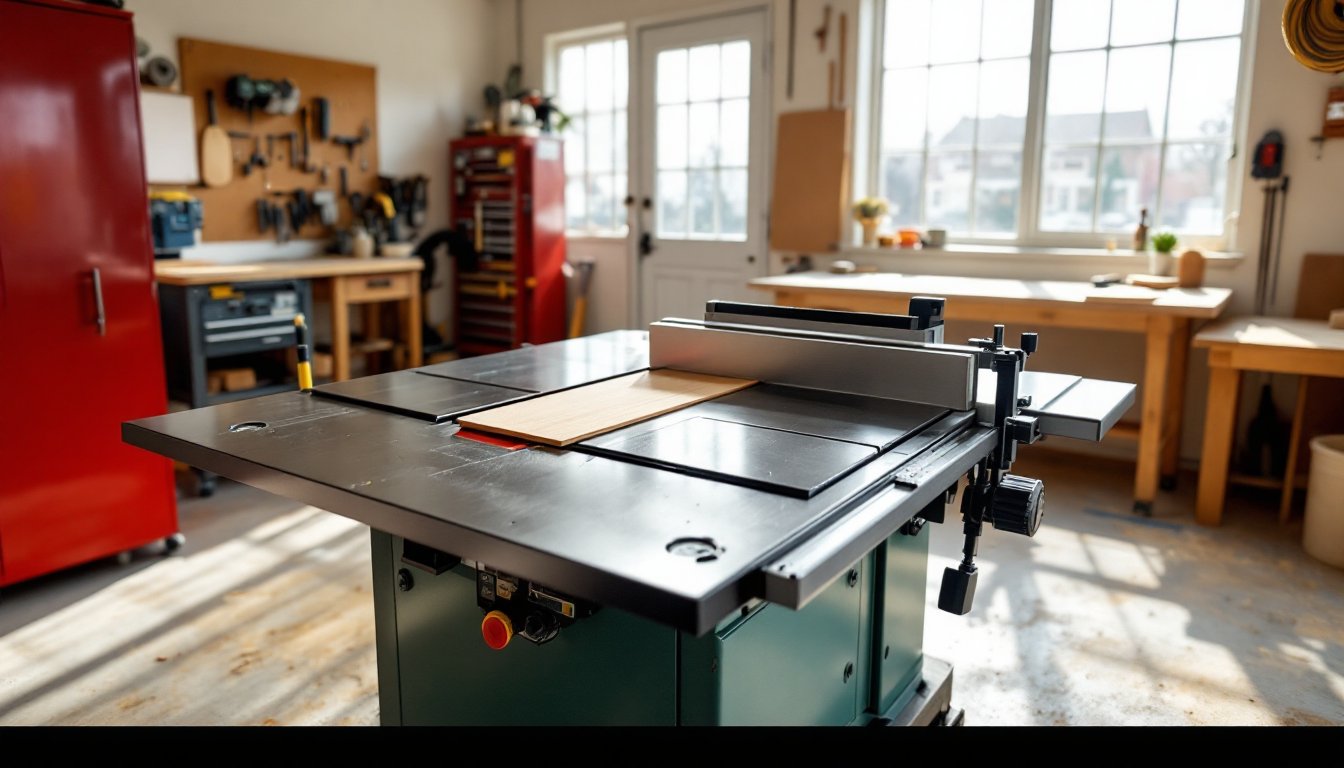
A table saw’s only as good as the surface it sits on. Whether you’re ripping plywood sheets or cutting dados for cabinet work, the table itself, the flat cast iron, steel, or aluminum surface that supports your workpiece, determines accuracy, safety, and how much material you can handle. Too small, and you’re fighting gravity on every crosscut. Warped or wobbly, and your cuts drift. The right table saw table setup transforms a cramped, frustrating workspace into one where joinery fits tight and long boards stay level. This guide walks through what makes a quality table, how to choose one that matches your projects, and how to build or upgrade your own when factory options fall short.
Table of Contents
ToggleKey Takeaways
- A quality table saw table with flatness, rigidity, and adequate surface area is essential for accurate, safe cuts and improved joinery fit.
- Cast iron tables provide superior mass and vibration dampening for fixed shop use, while stamped steel or aluminum offers portability for jobsite work.
- Cabinet saws deliver the best performance for fine woodworking, but contractor and hybrid models offer excellent value and can be upgraded with aftermarket cast iron wings and extensions.
- DIY shop-built table saw stands using 3/4-inch plywood torsion tops cost $150 to $250 and can add 50 to 100 pounds of mass while centralizing storage and dust collection.
- Simple upgrades like zero-clearance inserts, outfeed tables, T-track installation, and paste wax application significantly improve cut quality and safety without major expense.
- Check table flatness with a straightedge before purchasing or upgrading, and prioritize expansion options and standard miter slot compatibility for long-term flexibility with accessories.
What Is a Table Saw Table and Why Does It Matter?
The table saw table is the flat work surface, usually cast iron, stamped steel, or aluminum, that surrounds the blade. It includes the main table (directly around the blade insert) and any wings or extensions bolted to the sides. The blade protrudes through a throat plate in the center, and the fence rides along one edge to guide rip cuts.
Flatness is everything. A table that’s bowed, twisted, or sagging will telegraph those imperfections into every cut. Factory tables on contractor and cabinet saws are typically ground flat to within a few thousandths of an inch. Jobsite saws and benchtop models often use stamped steel or aluminum, which can warp over time or arrive slightly out of spec.
Surface area matters just as much. A 27-inch-deep table is standard, but if you’re breaking down full 4×8 sheets or working with 8-foot trim, you’ll need infeed and outfeed support. Extensions and roller stands help, but a larger table reduces setup time and keeps cuts square. The combined table, main surface plus wings, on a cabinet saw might measure 40 inches wide or more, which stabilizes wide panels and reduces tipping.
Cast iron adds mass, which dampens vibration and keeps the saw planted during heavy cuts. Steel and aluminum are lighter and easier to move, but they can flex under load if not properly reinforced. For fixed shop use, cast iron wins. For portability, steel or aluminum is the trade-off.
Types of Table Saw Tables for Every Workshop
Table saw tables come in several configurations, and knowing the differences helps you match the tool to your space and the work you do.
Benchtop saws have stamped aluminum or steel tables that sit on a workbench or folding stand. Surface area is limited, often 20×26 inches, and the tables can flex under pressure. They’re portable and affordable (table saw price starts around $200), but you’ll need outfeed support for anything longer than 3 feet.
Jobsite saws use folding or rolling stands and have slightly larger tables, often with stamped steel wings. They’re built for portability, not mass. If you’re framing houses or trimming decks, a jobsite saw works. If you’re milling hardwood or doing fine cabinetry, the lack of rigidity shows up in the cuts.
Contractor saws feature cast iron main tables and steel or cast iron wings. They’re belt-driven, heavier, and deliver better cut quality than portable models. Table dimensions are closer to cabinet saws, and aftermarket extensions are widely available.
Cabinet saws have full cast iron tables and wings, heavy trunnions mounted to the cabinet (not the table underside), and enclosed bases that reduce dust and noise. The table stays flat under load, and you can add router wings, sliding tables, or outfeed extensions without worrying about flex. How much is a table saw at this level? Expect to pay $1,500 to $3,500 for a quality cabinet saw.
Hybrid saws split the difference: cabinet-style enclosures with contractor-saw trunnions. The tables are cast iron, and performance is closer to a cabinet saw than a contractor model.
Built-In vs. Extension Tables
Built-in tables are part of the saw’s original design. Most saws ship with two wings (left and right), which bolt to the main table. These wings may be cast iron, stamped steel, or webbed cast iron (lighter but still rigid).
Extension tables are aftermarket or shop-built additions that increase rip capacity and outfeed support. Common options include:
- Cast iron extension wings that replace the stock right wing and add 12 to 24 inches of rip capacity.
- Router table wings that combine a built-in router mount with table saw functionality, as seen in many workshop project guides.
- Sliding crosscut tables that mount to the left side and allow panel cuts without moving the fence.
- Shop-built outfeed tables that match the height of the main table and catch long stock.
Extensions are worth it if you work with sheet goods or long boards regularly. They don’t add much cost, wood table saw extensions can be built for under $100, and they eliminate the need for roller stands or a helper.
How to Choose the Right Table Saw Table for Your Needs
Start with the work. If you’re trimming plywood for shelving or cutting 2×4s for framing, a contractor or jobsite saw with 30 inches of rip capacity handles 90% of tasks. If you’re building cabinets, cutting veneer, or working with hardwood, a cabinet saw with a full cast iron table is the baseline.
Rip capacity is the distance from the blade to the fence at its farthest extension. A 30-inch capacity lets you rip a 4×8 sheet lengthwise (cutting it at 24 inches). If you need to rip full sheets in half, look for 50 inches or add an extension.
Table flatness can be checked with a straightedge. Lay a 36-inch steel rule diagonally across the table and wings. Any gap larger than a business card (about 0.010 inch) will show up in your cuts. Cast iron tables stay flat: stamped steel can dish or crown over time.
Miter slot compatibility matters if you use sleds, crosscut jigs, or aftermarket miter gauges. Standard slots are 3/4 inch wide by 3/8 inch deep, but some budget saws use proprietary sizes. Check before you buy accessories.
Portability is a real consideration. A benchtop saw weighs 50 to 70 pounds: a cabinet saw weighs 400 to 600 pounds. If you’re working in a garage that doubles as parking, portability wins. If you have dedicated shop space, mass improves cut quality.
Expansion options are easier on some saws than others. Cabinet and contractor saws accept standard bolt-on wings. Jobsite saws often have fixed tables with limited upgrade paths.
Budget plays in, but don’t cheap out on the table. A $300 benchtop saw with a warped table will frustrate you on every cut. A $600 contractor saw with a flat cast iron table will serve you for decades.
Building a DIY Table Saw Table: Step-by-Step Overview
A shop-built table saw table typically refers to a stand-alone workbench that houses a benchtop or contractor saw, adding storage, outfeed support, and a larger work surface. This is different from replacing the saw’s cast iron top, you’re building a cabinet or torsion-box frame that the saw drops into.
Materials:
- Two sheets of 3/4-inch Baltic birch plywood or MDF (for the top and cabinet carcass)
- 2×4 framing lumber for the base (if building a stand rather than a full cabinet)
- T-track or aluminum extrusion for jigs and stop blocks (optional)
- Casters (locking, rated for at least 150 pounds each) if you need mobility
- Wood glue, 2-1/2-inch pocket screws, and 1-1/4-inch screws
Tools:
- Circular saw or track saw (for breaking down plywood)
- Drill/driver and impact driver
- Pocket hole jig (Kreg or similar)
- Clamps (at least four 24-inch bar clamps)
- Straightedge and square
Step 1: Measure the saw. Remove the fence and measure the footprint, including any bolt holes or mounting tabs. Note the height from the bottom of the saw to the top of the table, this determines how deep your cabinet or recess needs to be.
Step 2: Build the cabinet frame. Cut plywood panels for the sides, back, and shelves. Use pocket screws or dado joints to assemble. Leave the top open for the saw to drop in. If building a 2×4 stand instead, cut legs to final height minus the thickness of the top and the saw’s height.
Step 3: Create the top. Use two layers of 3/4-inch plywood glued and screwed together for a 1-1/2-inch-thick torsion top. This resists sag better than a single layer. Cut a recess for the saw so the saw’s table sits flush with (or slightly below) the plywood surface. Many DIY woodworking plans show template layouts for popular benchtop models.
Step 4: Install the saw. Drop the saw into the recess and secure it with bolts or clamps through the mounting holes. Shim if needed to get the saw table perfectly level with the surrounding plywood.
Step 5: Add outfeed support. Extend the plywood top behind the blade by at least 4 feet, or build a separate outfeed table at the same height. An 8-foot rip will tip backward without support.
Step 6: Finish and seal. Apply two coats of polyurethane or paste wax to the plywood top. This lets stock slide smoothly and protects against moisture. Avoid paint, it can get sticky in humid shops.
A well-built table saw table adds 50 to 100 pounds of mass, which reduces vibration, and it centralizes dust collection, tool storage, and accessory mounting in one footprint. Total material cost runs $150 to $250 depending on plywood grade and hardware.
Upgrading Your Existing Table Saw Table for Better Performance
Even a quality saw can benefit from a few upgrades. Here’s what moves the needle.
Replace stamped steel wings with cast iron. Many contractor saws ship with one cast iron wing and one steel wing. Swapping the steel for cast iron adds mass, improves flatness, and reduces flex. Aftermarket wings from manufacturers like Grizzly or Shop Fox run $80 to $150 each and bolt directly to standard mounting holes.
Add a zero-clearance insert. The factory throat plate has a wide slot to accommodate blade tilt. A zero-clearance insert, made from 1/4-inch hardboard or phenolic, has a kerf-width slot that supports small offcuts and reduces tearout. You can make one in ten minutes with a scrap of MDF and a few passes over the blade.
Install T-track in the miter slots. T-track accepts quick-adjust stops, featherboards, and hold-downs without clamps. Rockler and Woodcraft sell aluminum T-track in 48-inch lengths: cut it to fit your miter slots and secure it with countersunk screws.
Tune the table for flatness. Even cast iron can go out of flat if the wings are over-torqued or the saw has been dropped. Loosen all wing bolts, place a straightedge across the main table and wings, then retighten the bolts evenly while tapping the wings into alignment. Check with a feeler gauge, anything over 0.005 inch is noticeable.
Add an outfeed table. A simple folding or rolling outfeed table at the same height as your saw table prevents tipping and keeps cuts straight. Build one from a single sheet of plywood on a 2×4 frame with locking casters, as covered in many hands-on project tutorials.
Upgrade the fence rails. Aftermarket fence systems (Vega, Incra, Delta T3) offer better parallel adjustment, easier calibration, and longer rip capacity. They replace the entire rail-and-fence assembly and typically add 12 to 24 inches of capacity.
Wax the surface. Even new cast iron can drag. Clean off any rust or mill scale with mineral spirits and fine steel wool, then apply paste wax (Johnson’s or Butcher’s) and buff it smooth. Reapply every few months or whenever stock starts to stick.
Conclusion
The table saw table is the foundation, literally, of every accurate cut. Whether you’re choosing a new saw, building a custom workstation, or upgrading cast iron wings and outfeed extensions, prioritize flatness, rigidity, and enough surface area to support the work. A solid table setup reduces setup time, improves safety, and makes joinery fit the first time. Measure twice, check for flat, and don’t settle for a wobbly surface. Your cuts will show the difference.